Intensive Care Unit at AS Medical Complex
Contact hospital
- Availability
Contact hospital
- Booking
WhatsApp / call
- Location
Islamabad
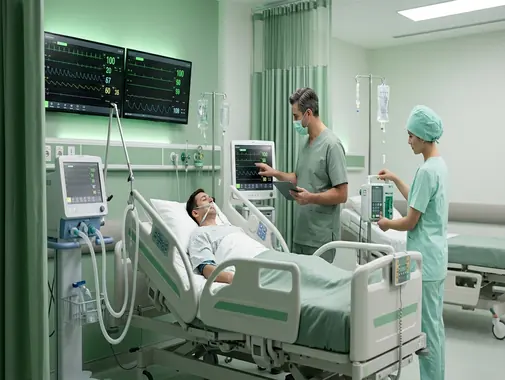
Advanced Critical Care, Continuous Monitoring & Organ Support
The Intensive Care Unit – ICU at AS Medical Complex is designed to provide continuous, high-acuity care for patients with severe, unstable, or potentially life-threatening medical and surgical conditions.
ICU patients require a greater level of observation and treatment than can normally be provided in a standard inpatient room.
Critical care may be required when a patient's:
-
Breathing is severely impaired
-
Blood pressure is dangerously unstable
-
Heart function is compromised
-
Brain function or consciousness is significantly affected
-
Kidneys or other organs are failing
-
Severe infection causes organ dysfunction
-
Major trauma results in critical injuries
-
Condition becomes unstable after major surgery
-
Multiple organ systems require simultaneous support
WHO defines critical care as ongoing intensive treatment for life-threatening illness or injury requiring close, constant monitoring and support. Critically ill patients may need advanced medical equipment, continuous vital-sign monitoring, and intravenous medicines to support blood pressure or heart function.
The purpose of ICU care is to:
-
Recognize deterioration quickly
-
Stabilize vital organ function
-
Treat the underlying illness or injury
-
Prevent additional organ failure
-
Provide advanced monitoring
-
Support recovery
-
Coordinate specialist treatment
-
Safely transition patients to lower-acuity care when their condition improves
ICU treatment is individualized according to the patient's diagnosis, severity of illness, response to treatment, previous health, and overall clinical situation.
Our ICU & Critical Care Services
Depending on the patient's clinical condition and the confirmed equipment, staffing, and specialist capabilities of AS Medical Complex, ICU care may include:
-
24-hour critical-care monitoring
-
Continuous heart-rate monitoring
-
Blood-pressure monitoring
-
Oxygen-saturation monitoring
-
Respiratory-rate monitoring
-
Neurological observation
-
Urine-output monitoring
-
Fluid-balance monitoring
-
Frequent clinical reassessment
-
Oxygen therapy
-
Advanced respiratory support where available
-
Non-invasive ventilation where clinically appropriate
-
Mechanical ventilation where available and indicated
-
Airway management
-
Emergency resuscitation
-
IV fluid management
-
Blood-pressure support
-
Vasopressor or other cardiovascular medicines where indicated
-
Management of severe infection and sepsis
-
Management of shock
-
Postoperative critical care
-
Trauma-related intensive care
-
Cardiac monitoring
-
Management of selected severe neurological conditions
-
Management of selected respiratory failure
-
Management of acute kidney dysfunction
-
Renal-replacement therapy / dialysis support where clinically indicated and available
-
Blood transfusion support
-
Laboratory monitoring
-
Portable imaging coordination
-
X-Ray, Ultrasound, CT, or MRI coordination where required
-
Pain management
-
Sedation where clinically indicated
-
Nutritional support
-
Prevention of pressure injuries
-
Infection-prevention measures
-
Early mobility and rehabilitation when clinically appropriate
-
Specialist consultation
-
Family communication
-
Transfer to an inpatient ward when critical-care support is no longer required
-
Referral or transfer to another specialized critical-care facility when necessary
Highly specialized ICU services should only be promoted as routinely available after confirming the exact infrastructure and trained personnel available at AS Medical Complex.
What Is an Intensive Care Unit?
An Intensive Care Unit is a specialized hospital area for patients with serious illnesses or injuries requiring more frequent assessment, specialized clinical expertise, and technological support than patients in a standard hospital ward.
The Society of Critical Care Medicine describes the ICU as a specialized part of the hospital that cares for patients with severe, life-threatening illness or injury, with greater nursing intensity and the ability to provide treatments such as life support.
Patients may enter the ICU from:
-
Emergency Department
-
Operating Theatre
-
Inpatient ward
-
Another hospital
-
Another critical-care area
depending on their condition.
Admission to ICU does not necessarily mean that a patient is unconscious or requires a ventilator.
Some patients are admitted because they require:
-
Continuous monitoring
-
Rapid access to treatment
-
Support for one organ
-
Close observation after major surgery
while others are critically ill and require support for several organs at the same time.
Who May Need ICU Admission?
ICU admission may be considered for selected patients with:
-
Respiratory failure
-
Severe pneumonia
-
Severe asthma or other respiratory deterioration
-
Sepsis or septic shock
-
Severe infection with organ dysfunction
-
Shock
-
Major heart problems
-
Serious cardiac rhythm abnormalities
-
Stroke with critical complications
-
Severe head injury
-
Reduced consciousness
-
Prolonged or recurrent seizures
-
Major trauma
-
Severe burns
-
Major bleeding
-
Multiple-organ dysfunction
-
Severe kidney failure with medical instability
-
Significant poisoning
-
Severe metabolic abnormalities
-
Major postoperative complications
-
High-risk recovery after selected major operations
-
Other rapidly deteriorating conditions
SCCM lists conditions such as heart attack, shock, heart failure, respiratory failure, pneumonia, pulmonary embolism, kidney failure, stroke, sepsis, major injury, burns, and multiple-organ failure among illnesses and injuries that can require critical care.
The decision to admit a patient to ICU depends on the overall clinical picture rather than one laboratory value or diagnosis alone.
Continuous Monitoring & Diagnostic Support
One of the defining features of ICU care is the ability to monitor the patient's condition closely and respond rapidly when changes occur.
Monitoring may include:
-
Heart rate and rhythm
-
Blood pressure
-
Oxygen saturation
-
Respiratory rate
-
Temperature
-
Level of consciousness
-
Urine output
-
Fluid balance
-
Blood glucose
-
Other condition-specific measurements
Some patients may require additional invasive monitoring where clinically indicated and where appropriate capability exists.
WHO emphasizes that critically ill patients need close, constant monitoring and continuing reassessment because their condition can change rapidly.
ICU Laboratory Testing
Critically ill patients may require frequent Laboratory investigations.
Depending on the condition, these may include:
-
Complete Blood Count
-
Electrolytes
-
Kidney-function tests
-
Liver-function tests
-
Blood glucose
-
Blood gases
-
Coagulation studies
-
Cardiac biomarkers
-
Infection-related testing
-
Blood cultures
-
Other clinically appropriate investigations
Repeated testing is performed when the result is expected to influence treatment.
The ICU team may use trends over time rather than interpreting one laboratory value in isolation.
ICU Imaging
Imaging may be required to identify the cause of critical illness or monitor treatment.
Depending on clinical need, imaging can include:
-
Portable Chest X-Ray
-
Ultrasound
-
Bedside / Portable Ultrasound
-
CT Scan
-
MRI
-
Echocardiography
-
Other specialized imaging
Transporting a critically ill patient outside the ICU requires appropriate assessment because the patient's monitoring and organ support may need to continue during transport.
Respiratory, Cardiovascular, Kidney & Neurological Support
Critical illness can affect one or several organ systems.
ICU treatment therefore often focuses both on treating the underlying disease and supporting organs while the patient recovers.
Respiratory Support
Patients with severe respiratory problems may require progressively greater support depending on their condition.
This may include:
-
Supplemental oxygen
-
High-level oxygen support where available
-
Non-invasive ventilation
-
Mechanical ventilation
-
Airway suction
-
Other respiratory support
Mechanical Ventilation
Mechanical ventilation uses a ventilator to support or temporarily replace a patient's breathing.
It may be considered when a patient:
-
Cannot maintain adequate oxygen levels
-
Cannot remove carbon dioxide effectively
-
Is severely exhausted from breathing
-
Has reduced consciousness and cannot protect the airway
-
Requires airway control during critical illness
-
Has another condition causing respiratory failure
A breathing tube may be inserted into the windpipe and connected to the ventilator when invasive mechanical ventilation is required.
Ventilation settings are adjusted according to:
-
Oxygen level
-
Lung condition
-
Blood gases
-
Patient response
-
Other clinical factors
Mechanical ventilation supports breathing while treatment is directed toward the underlying problem.
It does not itself cure pneumonia, sepsis, trauma, or another cause of respiratory failure.
Weaning From the Ventilator
When the patient's condition improves, the ICU team assesses whether respiratory support can gradually be reduced.
SCCM's ICU Liberation approach includes regular consideration of spontaneous awakening and spontaneous breathing trials as part of appropriate ICU care for selected mechanically ventilated patients.
Not every patient can be removed from ventilation immediately.
The timing depends on:
-
Lung function
-
Consciousness
-
Muscle strength
-
Underlying disease
-
Hemodynamic stability
-
Ability to protect the airway
Cardiovascular & Blood-Pressure Support
Critical illness can cause severe circulatory problems.
Patients may develop:
-
Very low blood pressure
-
Shock
-
Abnormal heart rhythm
-
Heart failure
-
Other cardiovascular instability
Treatment may involve:
-
IV fluids
-
Blood products
-
Blood-pressure-supporting medicines
-
Cardiac monitoring
-
Treatment of abnormal rhythms
-
Other condition-specific therapy
WHO specifically notes that critically ill patients may require intravenous medicines to support heart function or blood pressure.
Kidney Support
Critical illness can impair kidney function.
The ICU team may monitor:
-
Urine output
-
Creatinine
-
Electrolytes
-
Fluid balance
-
Acid-base balance
Selected critically ill patients with severe Acute Kidney Injury may require dialysis or another form of renal-replacement therapy where available.
This may be considered when problems such as:
-
Severe fluid overload
-
Dangerous electrolyte abnormalities
-
Severe acid-base disturbance
-
Certain toxin accumulation
-
Other kidney-related complications
cannot be controlled adequately with medical treatment.
The Nephrology and ICU teams determine whether kidney-replacement therapy is necessary.
Neurological Monitoring
Patients with serious neurological disease may require ICU care because of:
-
Stroke
-
Brain bleeding
-
Severe head injury
-
Reduced consciousness
-
Recurrent seizures
-
Brain infection
-
Other neurological emergencies
Monitoring may include:
-
Consciousness
-
Pupillary response
-
Limb movement
-
Seizure activity
-
Blood pressure
-
Oxygenation
-
Other neurological observations
Depending on the condition, further evaluation may require:
-
CT Brain
-
MRI
-
Neurology consultation
-
Neurosurgery consultation
-
Other investigations
Sepsis, Shock, Trauma & Postoperative Critical Care
ICU patients frequently have complex conditions that can affect several organs simultaneously.
Sepsis & Septic Shock
Sepsis is a life-threatening condition in which the body's response to infection causes organ dysfunction.
It can progress to:
-
Circulatory failure
-
Respiratory failure
-
Kidney injury
-
Altered consciousness
-
Multiple-organ failure
-
Septic shock
WHO states that effective sepsis care requires early recognition, resuscitation, targeted antimicrobial therapy, source control, intensive monitoring, detection of deterioration, and prevention of organ failure and complications.
ICU management may therefore involve:
-
Cultures and Laboratory testing
-
Antibiotics according to clinical indication
-
IV fluids
-
Blood-pressure support
-
Oxygen or ventilation
-
Kidney support
-
Treatment of the source of infection
-
Surgery or drainage where required
-
Continuous reassessment
Treatment must be individualized according to the infection, organ dysfunction, and patient response.
Shock
Shock means the body's organs are not receiving adequate circulation and oxygen delivery.
Possible causes include:
-
Severe infection
-
Major bleeding
-
Heart failure
-
Severe allergic reaction
-
Other critical illnesses
Treatment depends on the cause and may involve:
-
IV fluids
-
Blood transfusion
-
Vasopressor medicines
-
Treatment of infection
-
Control of bleeding
-
Cardiac treatment
-
Other urgent interventions
Shock is a medical emergency and can rapidly progress to multiple-organ dysfunction.
Major Trauma
Patients with major injuries may require ICU admission after:
-
Road traffic accidents
-
Falls
-
Significant head injury
-
Chest trauma
-
Abdominal trauma
-
Pelvic injury
-
Multiple fractures
-
Major blood loss
ICU care may coordinate with:
-
Emergency Department
-
General Surgery
-
Orthopedics
-
Neurosurgery
-
Anesthesia
-
Radiology
-
Blood Bank
-
Other specialties
depending on the injuries.
Postoperative ICU Care
Some patients require ICU monitoring after major surgery because of:
-
Complexity of the operation
-
Significant blood loss
-
Need for ventilatory support
-
Cardiovascular instability
-
Serious underlying medical disease
-
Postoperative complication
-
Other high-risk factors
Postoperative ICU care may include:
-
Respiratory monitoring
-
Pain management
-
Fluid management
-
Blood-pressure monitoring
-
Wound and drain observation
-
Laboratory monitoring
-
Infection surveillance
-
Early recognition of postoperative complications
Not every surgical patient requires ICU admission.
The surgical and Anesthesia teams determine the appropriate postoperative level of care.
ICU Procedures, Medicines & Supportive Treatment
Critically ill patients may require multiple medications and invasive devices.
Depending on the patient's condition, ICU treatment may involve:
-
Peripheral IV lines
-
Central venous access where required
-
Urinary catheter
-
Feeding tube
-
Breathing tube
-
Surgical drains
-
Other monitoring or treatment devices
Every invasive device introduces potential benefits and risks.
The clinical team should regularly reassess whether each device remains necessary.
Pain Management & Sedation
Patients in ICU may experience pain because of:
-
Illness
-
Injury
-
Surgery
-
Procedures
-
Mechanical ventilation
-
Immobility
Pain should be assessed and treated appropriately.
Selected mechanically ventilated or severely agitated patients may also require sedation.
However, deeper sedation is not automatically better.
SCCM's ICU Liberation framework emphasizes:
-
Assessing and treating pain
-
Appropriate choice of sedation
-
Regular assessment for delirium
-
Spontaneous awakening where appropriate
-
Early mobility
-
Family engagement
as important elements of modern critical-care practice.
The sedation plan should therefore be individualized and reviewed regularly.
Infection Prevention & Patient Safety in ICU
ICU patients can be particularly vulnerable to infection because they may:
-
Be critically ill
-
Have reduced immune defenses
-
Require ventilators
-
Have vascular catheters
-
Have urinary catheters
-
Have surgical wounds
-
Receive prolonged treatment
Potential healthcare-associated infections can include:
-
Ventilator-associated respiratory infection
-
Catheter-related bloodstream infection
-
Urinary infection
-
Surgical-site infection
-
Other infections
SCCM specifically identifies ventilator-associated pneumonia, catheter-related infection, and drug-resistant infection among important critical-care problems.
Infection-prevention practices may include:
-
Hand hygiene
-
Appropriate personal protective equipment
-
Sterile or aseptic technique
-
Appropriate airway care
-
Catheter-care protocols
-
Environmental cleaning
-
Timely removal of unnecessary invasive devices
-
Appropriate antimicrobial use
-
Isolation precautions when indicated
Patient safety also includes:
-
Correct patient identification
-
Medication safety
-
Prevention of pressure injury
-
Fall precautions where relevant
-
Safe blood transfusion
-
Safe procedures
-
Communication between clinical teams
WHO defines patient safety as organized processes and systems designed to reduce preventable healthcare-related harm.
Nutrition, Delirium, Mobility & Recovery During ICU Care
Modern critical care is not limited to machines and emergency medicines.
Long ICU stays can affect:
-
Muscles
-
Mobility
-
Nutrition
-
Sleep
-
Thinking
-
Emotional wellbeing
These areas require active attention during recovery.
Nutrition
Critically ill patients may be unable to eat normally because of:
-
Mechanical ventilation
-
Reduced consciousness
-
Swallowing difficulty
-
Major surgery
-
Severe illness
Depending on the situation, nutritional support may involve:
-
Oral nutrition
-
Tube feeding
-
Other nutritional support
The appropriate method depends on:
-
Gastrointestinal function
-
Clinical condition
-
Nutritional requirements
-
Other medical factors
Diet & Nutrition support may be incorporated into the patient's ICU care.
ICU Delirium
Delirium is an acute disturbance of attention and thinking that can occur during critical illness.
A patient may become:
-
Confused
-
Disoriented
-
Restless
-
Very sleepy
-
Less responsive
-
Unusually agitated
Possible contributors include:
-
Severe illness
-
Infection
-
Medication
-
Sedation
-
Sleep disruption
-
Organ dysfunction
-
Other factors
SCCM's ICU Liberation framework specifically includes systematic assessment, prevention, and management of delirium.
Delirium is not automatically the same as dementia.
It can fluctuate considerably during the day and may improve as the underlying illness resolves.
Early Mobility
Prolonged bed rest can lead to:
-
Muscle weakness
-
Reduced mobility
-
Loss of independence
-
Longer rehabilitation
When the patient's condition is stable enough, rehabilitation may gradually involve:
-
Position changes
-
Sitting up
-
Bed exercises
-
Standing
-
Walking
with appropriate clinical supervision.
SCCM includes early mobility and exercise as a key part of its ICU Liberation approach.
Not every ICU patient can begin mobility at the same stage.
Safety depends on:
-
Breathing support
-
Blood pressure
-
Consciousness
-
Injury
-
Recent surgery
-
Other clinical factors
Family Communication & Visiting the ICU
Critical illness can be stressful and confusing for families.
Patients may be:
-
Sedated
-
Unable to speak
-
Connected to medical equipment
-
Receiving mechanical ventilation
-
Unable to make decisions temporarily
Clear communication is therefore an important part of ICU care.
The clinical team should help families understand:
-
Why ICU care is required
-
Current medical problems
-
Important treatments
-
Changes in the patient's condition
-
Planned investigations
-
Treatment goals
-
Expected next steps
SCCM's 2024 family-centered ICU guidelines emphasize structured communication, family education, appropriate family presence, and involvement of families in care where feasible and clinically appropriate.
Visiting an ICU Patient
ICU visiting policies may be influenced by:
-
Patient condition
-
Procedures
-
Infection-control requirements
-
Privacy
-
Clinical emergencies
-
Other ICU circumstances
Visitors may be asked to:
-
Clean their hands
-
Use protective equipment when required
-
Avoid touching medical devices
-
Limit the number of visitors
-
Follow instructions from clinical staff
Patients with infection-control precautions may have additional restrictions.
Family presence can be valuable, but immediate medical care must take priority during:
-
Resuscitation
-
Emergency procedures
-
Deterioration
-
Other critical events
Making Decisions for an Unconscious Patient
Some ICU patients cannot communicate because of:
-
Sedation
-
Mechanical ventilation
-
Brain injury
-
Severe illness
-
Reduced consciousness
Where the patient cannot make decisions, the clinical team may communicate with an appropriate family member or legally recognized decision-maker according to:
-
The patient's known wishes
-
Clinical circumstances
-
Applicable hospital policy
-
Relevant legal and ethical requirements
The goal should be to make decisions aligned with the patient's values and best clinical interests.
Transfer From ICU, Rehabilitation & Post-ICU Recovery
ICU treatment continues only while the patient requires critical-care monitoring or organ support.
When the condition improves sufficiently, the clinical team may consider transfer to:
-
High Dependency Unit where available
-
Medical ward
-
Surgical ward
-
Another inpatient service
The decision depends on:
-
Breathing stability
-
Blood pressure
-
Consciousness
-
Organ function
-
Monitoring requirements
-
Need for ongoing specialist treatment
SCCM's ICU admission and discharge guidance emphasizes matching patients to the level of care required by their current physiological needs.
Recovery After Critical Illness
Surviving critical illness does not always mean that recovery ends when the patient leaves ICU.
Patients can experience persistent problems involving:
-
Muscle weakness
-
Fatigue
-
Reduced exercise tolerance
-
Sleep
-
Memory
-
Concentration
-
Anxiety
-
Mood
-
Ability to perform everyday activities
Some patients may require:
-
Physiotherapy
-
Nutritional rehabilitation
-
Speech and swallowing assessment
-
Psychological support
-
Specialist medical follow-up
-
Home support
The rehabilitation plan should reflect the patient's underlying disease and functional condition.
Readmission to ICU
Occasionally, a patient transferred from ICU may deteriorate again.
Urgent reassessment is required if a hospitalized patient develops:
-
Severe breathing difficulty
-
Significant fall in blood pressure
-
Major bleeding
-
Loss of consciousness
-
New severe neurological symptoms
-
Severe infection with deterioration
-
Other critical changes
A patient may need return to ICU if intensive monitoring or organ support becomes necessary again.
ICU Admission, Emergency Care & Multidisciplinary Coordination
Most patients do not directly book themselves into an ICU.
ICU admission normally follows clinical assessment through:
-
Emergency Department
-
Another hospital department
-
Operating Theatre
-
Another healthcare facility
The treating team determines whether the patient requires intensive care.
Patients with potentially life-threatening symptoms should seek Emergency assessment, not wait for an outpatient ICU appointment.
Urgent symptoms include:
-
Severe breathing difficulty
-
Severe chest pain
-
Sudden loss of consciousness
-
Stroke symptoms
-
Persistent seizure
-
Major trauma
-
Severe uncontrolled bleeding
-
Shock
-
Severe infection with deterioration
-
Other life-threatening symptoms
WHO emphasizes that emergency and critical care form a connected pathway: emergency teams recognize and stabilize acute illness, while critical care provides ongoing intensive monitoring and treatment when continued organ support is required.
Multidisciplinary ICU Care
Critically ill patients frequently have problems affecting several organ systems.
ICU management may therefore involve collaboration between:
-
Critical Care / ICU team
-
General Medicine
-
Cardiology
-
Pulmonology
-
Neurology
-
Neurosurgery
-
Nephrology
-
Gastroenterology
-
General & Laparoscopic Surgery
-
Orthopedics
-
Urology
-
Gynecology & Obstetrics
-
Anesthesia
-
Infectious Disease
-
Radiology
-
Laboratory
-
Blood Bank
-
Pharmacy
-
Diet & Nutrition
-
Physiotherapy
-
Speech and Language Pathology
-
Other relevant services
SCCM describes the critical-care team as a multidisciplinary group of specially trained professionals caring for severely ill patients in the ICU.
The exact specialists involved depend on the patient's condition.
The purpose of multidisciplinary ICU care is to ensure that the patient's:
-
Immediate life-threatening problems
-
Underlying disease
-
Organ support
-
Medication
-
Nutrition
-
Rehabilitation
-
Long-term recovery
are considered as part of one coordinated care plan.
ICU FAQs
What is an ICU?
An Intensive Care Unit is a specialized hospital area for patients with severe or potentially life-threatening illness or injury who require close monitoring, frequent clinical assessment, and sometimes advanced organ-support treatment. WHO describes critical care as ongoing intensive treatment requiring close, constant monitoring and support.
Does every patient in ICU need a ventilator?
No. Some ICU patients require mechanical ventilation because they cannot breathe adequately on their own, but others are admitted for severe infection, unstable blood pressure, heart problems, neurological disease, major trauma, postoperative monitoring, kidney failure, or other conditions requiring intensive observation and treatment. SCCM notes that ICU patients have diverse illnesses but share a need for greater clinical and technological support than routine ward patients.
What is the difference between the Emergency Department and ICU?
The Emergency Department provides immediate assessment and stabilization for acute illness and injury. Patients who remain critically ill and need ongoing intensive monitoring or organ support may then be admitted to ICU. SCCM describes Emergency care as the initial treatment and stabilization stage, with ICU providing continuing treatment for patients whose illness remains life-threatening.
Can family members visit a patient in ICU?
Family involvement is an important part of critical care, but visiting arrangements depend on the patient's condition, infection-control precautions, procedures, privacy requirements, and current ICU policy. SCCM's 2024 guidance supports family presence and structured family communication when clinically appropriate.
Why are ICU patients sometimes sedated?
Sedation may be required for selected patients because of mechanical ventilation, procedures, severe agitation, pain, or another clinical reason. Sedation should be individualized and regularly reassessed. Modern critical-care approaches emphasize appropriate pain treatment, careful sedation choice, delirium prevention, spontaneous awakening when suitable, and early mobility rather than unnecessary prolonged deep sedation.
How long does a patient stay in ICU?
There is no fixed ICU stay. Some patients require critical care for a short period after surgery or temporary instability, while others with severe infection, respiratory failure, major trauma, or multiple-organ dysfunction may require longer treatment. Transfer out of ICU occurs when intensive monitoring and organ support are no longer required and the patient can safely receive care in a lower-acuity hospital area.
Does leaving ICU mean the patient has completely recovered?
Not necessarily. Transfer from ICU generally means the patient has improved enough to no longer require the same level of intensive monitoring or organ support. Further hospital treatment and rehabilitation may still be necessary. Some survivors of critical illness experience weakness, reduced mobility, cognitive or psychological difficulties and may require continued rehabilitation and specialist follow-up.
-
Intensive Care Unit at AS Medical Complex
The Intensive Care Unit at AS Medical Complex is designed to provide continuous monitoring and coordinated critical care for patients with severe medical illness, major injury, postoperative complications, organ dysfunction, and other potentially life-threatening conditions.
ICU care may involve support for:
-
Breathing
-
Circulation and blood pressure
-
Heart function
-
Kidney function
-
Neurological status
-
Severe infection
-
Nutrition
-
Recovery after major surgery
while the medical team simultaneously treats the underlying cause of critical illness.
WHO emphasizes that effective critical care requires ongoing monitoring, repeated reassessment, comprehensive treatment, organ support when necessary, and prevention of additional complications.
Modern ICU care also extends beyond immediate survival. Appropriate management of pain, sedation, delirium, mobility, sleep, rehabilitation, nutrition, infection prevention, and family engagement contributes to a more comprehensive critical-care pathway. SCCM incorporates these principles into its ICU Liberation framework.
Depending on clinical need, ICU care at AS Medical Complex can be coordinated with Emergency Services, General Medicine, Cardiology, Pulmonology, Neurology, Neurosurgery, Nephrology, Gastroenterology, Surgery, Orthopedics, Urology, Gynecology, Anesthesia, Infectious Disease, Laboratory, Radiology, Blood Bank, Pharmacy, Diet & Nutrition, Physiotherapy, and other appropriate specialties.
Advanced services including invasive ventilation, advanced hemodynamic monitoring, continuous renal-replacement therapy, or other highly specialized critical-care interventions should only be advertised as routinely available after the exact ICU equipment, specialist staffing, and hospital capabilities have been confirmed.
For severe breathing difficulty, shock, major trauma, loss of consciousness, severe infection with organ dysfunction, significant bleeding, neurological deterioration, or another potentially life-threatening condition, seek immediate assessment through the Emergency Department at AS Medical Complex. ICU admission is determined by the treating clinical team according to the patient's need for continuous monitoring and critical-care support.
-