Endoscopy Service at AS Medical Complex
Contact hospital
- Availability
Contact hospital
- Booking
WhatsApp / call
- Location
Islamabad
Comprehensive Upper Gastrointestinal Endoscopy, Diagnosis & Therapeutic Care
The Endoscopy Service at AS Medical Complex provides specialist assessment and endoscopic evaluation for conditions affecting the esophagus, stomach, and first part of the small intestine (duodenum).
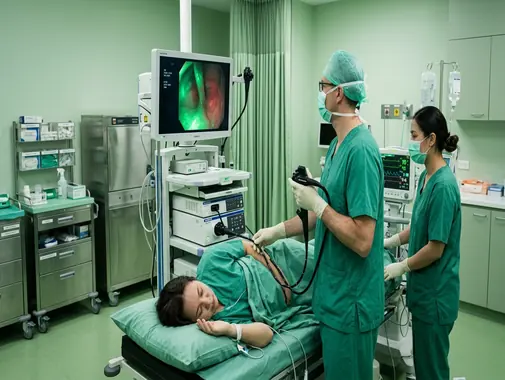
Upper gastrointestinal endoscopy—also known as Upper GI Endoscopy, Gastroscopy, or Esophagogastroduodenoscopy (EGD)—uses a thin flexible endoscope with a camera to allow the doctor to directly examine the lining of the upper digestive tract.
Endoscopy can be used for both diagnostic and therapeutic purposes.
During an endoscopic procedure, the doctor may identify inflammation, ulcers, bleeding, narrowing, abnormal growths, or other abnormalities and may also take small tissue samples for laboratory examination.
Selected conditions can sometimes be treated during the same procedure.
At AS Medical Complex, endoscopy should be recommended according to the patient’s symptoms, medical history, previous investigations, clinical findings, and individual risk factors.
Our Endoscopy Services
Depending on the patient’s condition and available facilities, Endoscopy services at AS Medical Complex may include:
-
Upper GI Endoscopy
-
Gastroscopy
-
Esophagogastroduodenoscopy – EGD
-
Diagnostic upper gastrointestinal endoscopy
-
Evaluation of persistent upper abdominal pain
-
Evaluation of persistent heartburn
-
Gastroesophageal reflux assessment
-
Difficulty swallowing assessment
-
Painful swallowing assessment
-
Persistent nausea or vomiting assessment
-
Unexplained upper gastrointestinal symptoms
-
Evaluation of gastrointestinal bleeding
-
Assessment of vomiting blood
-
Assessment of black stools
-
Evaluation of anemia when upper GI blood loss is suspected
-
Peptic-ulcer assessment
-
Gastritis assessment
-
Esophagitis assessment
-
Barrett’s esophagus evaluation
-
Evaluation of suspected upper GI tumors
-
Endoscopic biopsy
-
Gastric biopsy
-
Esophageal biopsy
-
Duodenal biopsy
-
Evaluation for selected causes of malabsorption
-
Evaluation for celiac disease where clinically indicated
-
Endoscopic treatment of selected bleeding lesions
-
Removal of selected foreign bodies
-
Removal of selected upper-GI polyps or lesions
-
Dilatation of selected upper-GI strictures where appropriate
-
Follow-up endoscopy
-
Post-treatment reassessment
-
Endoscopic second opinion
The exact procedure or therapeutic intervention available depends on the patient’s condition, specialist expertise, and facilities available at AS Medical Complex.
What Is Upper GI Endoscopy?
Upper GI endoscopy is a procedure that allows direct examination of the lining of the upper gastrointestinal tract.
The areas normally examined include:
-
Esophagus
-
Stomach
-
Duodenum
A flexible tube containing a camera and light source is passed through the mouth and carefully advanced into the digestive tract.
The image is transmitted to a monitor so the doctor can inspect the tissues in detail.
Upper GI endoscopy can help diagnose conditions affecting the esophagus, stomach, and duodenum and may also allow biopsy or selected treatments during the same procedure.
Other Names for Upper GI Endoscopy
The procedure may also be called:
-
Gastroscopy
-
Upper endoscopy
-
Upper GI endoscopy
-
OGD
-
EGD
-
Esophagogastroduodenoscopy
These terms generally describe an endoscopic examination of the upper digestive tract.
Why Is Endoscopy Performed?
A doctor may recommend endoscopy when symptoms suggest a problem within the upper gastrointestinal tract.
Possible reasons include:
-
Persistent upper abdominal pain
-
Persistent heartburn
-
Acid reflux symptoms
-
Difficulty swallowing
-
Pain during swallowing
-
Persistent nausea
-
Repeated vomiting
-
Vomiting blood
-
Black or tarry stools
-
Unexplained anemia
-
Unexplained weight loss
-
Persistent loss of appetite
-
Suspected ulcer
-
Suspected gastritis
-
Suspected esophageal disease
-
Abnormal imaging
-
Follow-up of a previously diagnosed condition
NIDDK identifies persistent pain or heartburn, vomiting, and swallowing difficulty among symptoms for which upper GI endoscopy may be used diagnostically.
Diagnostic & Therapeutic Endoscopy
Endoscopy is more than a diagnostic camera examination.
Depending on the findings, specialized instruments can sometimes be passed through the endoscope.
This allows selected procedures such as:
-
Taking biopsies
-
Controlling bleeding
-
Removing certain polyps
-
Removing selected foreign bodies
-
Dilating selected narrowed areas
-
Performing other appropriate therapeutic procedures
NIDDK notes that upper endoscopy may be used to obtain tissue samples, treat bleeding, remove selected growths, and open narrowed areas of the esophagus.
Upper Abdominal Pain
Upper abdominal pain may arise from several conditions involving the digestive system.
Possible causes include:
-
Gastritis
-
Peptic ulcer disease
-
Gastroesophageal reflux
-
Medication-related irritation
-
Selected infections
-
Gallbladder disease
-
Pancreatic conditions
-
Functional digestive disorders
-
Other gastrointestinal disease
Endoscopy is not automatically necessary for every episode of abdominal pain.
The doctor considers:
-
Duration of symptoms
-
Severity
-
Age
-
Medication history
-
Associated symptoms
-
Previous investigations
-
Alarm features
before deciding whether an endoscopic examination is appropriate.
Gastroesophageal Reflux Disease – GERD
GERD occurs when stomach contents repeatedly flow backward into the esophagus and produce troublesome symptoms or complications.
Patients may experience:
-
Heartburn
-
Acid taste
-
Regurgitation
-
Chest discomfort
-
Persistent throat symptoms
-
Difficulty swallowing
Many patients with typical reflux symptoms can initially be assessed and treated without endoscopy.
However, endoscopy may be useful when:
-
Symptoms are persistent
-
Treatment is not working as expected
-
Difficulty swallowing develops
-
Bleeding is suspected
-
Anemia develops
-
Weight loss is unexplained
-
Another upper-GI disease needs to be excluded
Upper endoscopy can help identify complications or alternative diagnoses and can permit biopsy where clinically required.
Esophagitis
Esophagitis refers to inflammation of the esophagus.
Possible causes include:
-
Acid reflux
-
Certain medications
-
Infection
-
Allergic or immune-related conditions
-
Other irritation
Symptoms may include:
-
Heartburn
-
Chest discomfort
-
Painful swallowing
-
Difficulty swallowing
-
Food sticking
Endoscopy allows direct visualization of the esophageal lining and may help identify inflammation, ulcers, narrowing, or other abnormalities.
Barrett’s Esophagus
Barrett’s esophagus is a condition in which the normal lining of the lower esophagus changes, usually in association with long-standing reflux disease.
Endoscopy may be used to:
-
Examine the affected area
-
Obtain biopsies
-
Monitor selected patients
-
Assess suspicious changes
NIDDK identifies Barrett’s esophagus among conditions that can be identified during upper GI endoscopy.
Patients with Barrett’s esophagus require follow-up according to specialist recommendations rather than undergoing endoscopy at arbitrary intervals.
Difficulty Swallowing – Dysphagia
Difficulty swallowing may involve:
-
Food sticking
-
Difficulty swallowing solids
-
Difficulty swallowing liquids
-
Progressive swallowing difficulty
-
Pain when swallowing
Possible causes can include:
-
Esophageal inflammation
-
Narrowing
-
Rings
-
Motility disorders
-
Tumors
-
Other esophageal abnormalities
Progressive dysphagia requires medical evaluation.
Upper GI endoscopy can allow direct assessment of the esophagus and can sometimes identify the underlying cause.
Esophageal Stricture
An esophageal stricture is an abnormal narrowing of the esophagus.
Patients may experience:
-
Difficulty swallowing
-
Food sticking
-
Regurgitation
-
Difficulty eating solid foods
Possible causes include:
-
Long-standing acid reflux
-
Previous inflammation
-
Scarring
-
Previous procedures
-
Other diseases
Endoscopy may help identify the location and cause of narrowing.
Selected strictures may also be treated by endoscopic dilatation when clinically appropriate.
Endoscopic Dilatation
Endoscopic dilatation is used to widen selected narrowed areas of the upper gastrointestinal tract.
It may be considered for certain:
-
Esophageal strictures
-
Rings
-
Other appropriate narrowing
The procedure carries specific risks and should only be performed when the treating gastroenterologist determines that the expected benefit outweighs those risks.
Gastritis
Gastritis refers to inflammation or irritation of the stomach lining.
Possible symptoms include:
-
Upper abdominal discomfort
-
Burning
-
Nausea
-
Bloating
-
Reduced appetite
-
Vomiting
Some patients may have gastritis without major symptoms.
Possible contributing factors include:
-
Helicobacter pylori infection
-
Certain pain medicines
-
Alcohol
-
Other medical conditions
Endoscopy may identify inflammation and allow biopsy when further assessment is necessary.
Helicobacter Pylori – H. pylori
Helicobacter pylori is a bacterium associated with gastritis and peptic-ulcer disease.
Testing may be performed using different methods.
When endoscopy is being performed for another appropriate reason, gastric biopsies may sometimes be obtained for H. pylori-related testing.
Not every patient suspected of having H. pylori requires an endoscopy because non-invasive tests are also available.
The doctor selects testing according to the clinical situation.
Peptic Ulcer Disease
Peptic ulcers are open sores involving the lining of the stomach or duodenum.
Symptoms may include:
-
Upper abdominal pain
-
Burning discomfort
-
Nausea
-
Bloating
-
Loss of appetite
-
Gastrointestinal bleeding
Complications can include:
-
Bleeding
-
Perforation
-
Obstruction
Endoscopy allows the doctor to directly examine ulcers and, when necessary, obtain biopsies or treat bleeding.
Gastrointestinal Bleeding
Upper gastrointestinal bleeding may originate from the:
-
Esophagus
-
Stomach
-
Duodenum
Possible symptoms include:
-
Vomiting blood
-
Vomit resembling coffee grounds
-
Black or tarry stools
-
Weakness
-
Dizziness
-
Fainting
-
Anemia
GI bleeding can range from slow chronic blood loss to a major medical emergency.
NIDDK notes that doctors can sometimes diagnose and treat gastrointestinal bleeding during the same endoscopic procedure.
Endoscopic Treatment of Bleeding
Depending on the cause and available expertise, endoscopic treatment may involve techniques such as:
-
Injection therapy
-
Thermal treatment
-
Endoscopic clips
-
Banding for selected lesions
-
Other hemostatic methods
NIDDK describes injection, thermal therapy, clips or bands, and topical agents among endoscopic methods used to control GI bleeding.
The appropriate technique depends on the source and severity of bleeding.
Vomiting Blood
Vomiting fresh blood or material resembling coffee grounds can indicate upper gastrointestinal bleeding.
Possible causes include:
-
Peptic ulcer
-
Severe gastritis
-
Esophageal disease
-
Varices
-
Other upper-GI lesions
Significant vomiting of blood requires urgent emergency medical assessment.
Patients should not wait for a routine outpatient endoscopy appointment if active significant bleeding is suspected.
Black or Tarry Stool
Black, sticky, tar-like stool may indicate bleeding from the upper digestive tract.
Patients with black stool—particularly when associated with:
-
Weakness
-
Dizziness
-
Fainting
-
Rapid heartbeat
-
Vomiting blood
should receive prompt medical assessment.
Esophageal Varices
Esophageal varices are enlarged veins within the esophagus, most commonly associated with increased pressure in the portal venous system.
They can sometimes bleed severely.
Endoscopy may be used to:
-
Diagnose varices
-
Assess their appearance
-
Treat selected bleeding or high-risk varices
Patients with significant variceal bleeding require urgent specialist and hospital management.
Anemia & Endoscopy
Iron-deficiency or otherwise unexplained anemia may sometimes result from slow gastrointestinal blood loss.
When upper-GI bleeding is suspected, endoscopy may form part of the investigation.
Evaluation of anemia may also require:
-
Complete Blood Count
-
Iron studies
-
Stool testing where appropriate
-
Colonoscopy
-
Other investigations
depending on patient age, symptoms, and clinical findings.
Unexplained Weight Loss
Unintentional weight loss can have many causes.
When significant weight loss occurs alongside upper gastrointestinal symptoms such as:
-
Difficulty swallowing
-
Persistent vomiting
-
Loss of appetite
-
Abdominal pain
-
Anemia
further gastrointestinal evaluation may be necessary.
Endoscopy may be one component of that assessment.
Persistent Vomiting
Persistent or recurrent vomiting can result from:
-
Gastric inflammation
-
Ulcers
-
Gastric outlet obstruction
-
Medication effects
-
Neurological illness
-
Metabolic disease
-
Other gastrointestinal problems
Upper endoscopy may be recommended when a structural upper-GI cause needs to be investigated.
Severe vomiting with dehydration, blood, severe pain, or major deterioration requires urgent assessment.
Abnormal Imaging
Patients may be referred for endoscopy after abnormalities are identified on:
-
CT Scan
-
MRI
-
Barium studies
-
Other gastrointestinal imaging
Endoscopy can sometimes provide direct visualization and enable tissue biopsy.
Imaging and endoscopy often complement each other rather than being interchangeable.
Endoscopic Biopsy
One major advantage of endoscopy is the ability to obtain tissue samples.
During the procedure, the doctor may pass small instruments through the endoscope to remove tiny tissue samples.
Biopsy may be performed from the:
-
Esophagus
-
Stomach
-
Duodenum
-
Other visible lesions
NIDDK confirms that small tissue, cell, or fluid samples can be obtained through the endoscope for laboratory examination.
Why Is a Biopsy Taken?
A biopsy may help evaluate:
-
Inflammation
-
H. pylori-related changes
-
Celiac disease
-
Barrett’s esophagus
-
Suspicious ulcers
-
Abnormal growths
-
Precancerous changes
-
Cancer
-
Other gastrointestinal conditions
A biopsy does not automatically mean cancer is suspected or present.
Biopsies are frequently used to establish a precise diagnosis.
Pathology After Endoscopy
Endoscopic tissue samples are sent to the Pathology laboratory.
A pathologist examines the tissue microscopically and may provide information about:
-
Inflammation
-
Infection
-
Cellular abnormalities
-
Precancerous changes
-
Tumor type
-
Other tissue findings
Endoscopy findings and pathology results are considered together when planning treatment.
Celiac Disease Assessment
Celiac disease is an immune-related condition in which gluten exposure damages the lining of the small intestine in susceptible individuals.
When endoscopy is clinically indicated, biopsies may be taken from the duodenum to evaluate suspected celiac disease.
NIDDK identifies celiac disease among disorders that may be diagnosed through upper GI endoscopy.
Blood testing is often also part of celiac-disease evaluation.
Upper GI Polyps & Growths
Endoscopy may identify:
-
Polyps
-
Nodules
-
Submucosal abnormalities
-
Other growths
Depending on the lesion, the doctor may:
-
Observe it
-
Biopsy it
-
Remove it
-
Arrange further imaging
-
Recommend surgery
-
Refer for another specialized endoscopic procedure
The treatment plan depends on location, size, appearance, pathology, and patient health.
Suspected Upper Gastrointestinal Cancer
Endoscopy plays an important role in investigating suspicious lesions involving the:
-
Esophagus
-
Stomach
-
Duodenum
If an abnormal area is seen, biopsies can be obtained for pathological diagnosis.
Further management may require:
-
CT
-
MRI
-
Additional endoscopic evaluation
-
Oncology
-
General Surgery
-
Pathology
-
Multidisciplinary cancer assessment
A visual endoscopic impression alone does not replace tissue diagnosis when biopsy is required.
Foreign Body Removal
Objects can occasionally become lodged within the esophagus or upper gastrointestinal tract.
Examples may include:
-
Food bolus
-
Coins
-
Dental material
-
Other swallowed objects
Selected objects may be removed endoscopically.
The Ali Medical reference page specifically includes removal of foreign objects among therapeutic uses of endoscopy.
Some swallowed objects represent emergencies and require immediate specialist evaluation.
Food Bolus Obstruction
Food may become lodged in the esophagus, particularly in patients with an underlying narrowing or esophageal disorder.
Symptoms may include:
-
Sudden difficulty swallowing
-
Inability to swallow saliva
-
Drooling
-
Chest discomfort
-
Persistent sensation of food being stuck
Complete obstruction requires urgent medical assessment.
After treatment, investigation of the underlying cause may also be required.
Endoscopy for Follow-Up
Repeat endoscopy may sometimes be recommended to:
-
Assess healing
-
Monitor Barrett’s esophagus
-
Follow selected ulcers
-
Reassess abnormal tissue
-
Monitor previously identified lesions
-
Evaluate recurrence of symptoms
-
Follow treatment of another condition
The timing of repeat endoscopy should be based on the diagnosis and specialist recommendation.
Endoscopy Is Not Required for Every Digestive Symptom
Many gastrointestinal symptoms can initially be evaluated through:
-
Medical history
-
Physical examination
-
Laboratory testing
-
Ultrasound
-
Medication trial
-
Lifestyle measures
-
Other non-invasive investigations
Endoscopy is recommended when it is expected to provide clinically useful diagnostic or therapeutic information.
Before Your Endoscopy
Before the procedure, the medical team should review:
-
Current symptoms
-
Medical history
-
Previous endoscopy
-
Previous gastrointestinal surgery
-
Allergies
-
Current medications
-
Blood-thinning medication
-
Diabetes
-
Heart disease
-
Lung disease
-
Kidney disease
-
Pregnancy where relevant
-
Previous anesthesia or sedation problems
NIDDK recommends discussing medical conditions, allergies, medicines, vitamins, supplements, blood thinners, diabetes medicines, blood-pressure medicines, and NSAIDs before upper GI endoscopy.
Fasting Before Endoscopy
The stomach usually needs to be empty before upper GI endoscopy so that the doctor can see clearly and the procedure can be performed more safely.
Patients should follow the specific fasting instructions provided by the treating endoscopy and anesthesia team.
NIDDK notes that patients may be asked not to eat or drink for up to several hours before upper GI endoscopy, with instructions varying according to the procedure and patient.
Do not assume that the same fasting instructions apply to every patient.
Medicines Before Endoscopy
Some medicines may require special planning before endoscopy.
These can include:
-
Blood thinners
-
Antiplatelet medication
-
Diabetes medicines
-
Insulin
-
Certain blood-pressure medicines
-
Iron supplements
-
NSAIDs
-
Other medication
Patients should not stop important prescription medicines independently.
Any medication changes should be made according to instructions from the treating doctor.
Blood Thinners & Endoscopy
Patients taking blood-thinning medication should inform the endoscopy team in advance.
Management depends on:
-
Reason for the blood thinner
-
Type of medication
-
Planned procedure
-
Whether biopsy or therapeutic treatment is expected
-
Bleeding risk
-
Risk of stopping the medicine
Stopping anticoagulant or antiplatelet medication without medical advice can itself be dangerous.
Diabetes & Endoscopy
Patients with diabetes may require individualized instructions regarding:
-
Fasting
-
Insulin
-
Oral diabetes medicines
-
Blood-glucose monitoring
-
Scheduling of the procedure
Patients should not independently change diabetes treatment without medical instructions.
Sedation During Endoscopy
Many upper GI endoscopies are performed with medication intended to help the patient remain comfortable and relaxed.
NIDDK notes that patients are often given an intravenous sedative, while some procedures may be performed without sedation.
The exact approach depends on:
-
Procedure
-
Patient preference where appropriate
-
Medical condition
-
Previous experiences
-
Sedation risk
-
Endoscopist and anesthesia assessment
Throat Numbing Medication
A local anesthetic spray may sometimes be used to numb the throat and reduce gagging during upper endoscopy.
The endoscopy team will advise when it is safe to eat or drink afterward.
Endoscopy & Anesthesia
Some patients may require additional anesthesia support because of:
-
Significant medical conditions
-
High sedation risk
-
Complex procedure
-
Previous sedation problems
-
Other individual considerations
Where required, the Endoscopy team coordinates care with the Anesthesia Department.
What Happens During Upper Endoscopy?
During the procedure:
-
The patient is generally positioned on the side.
-
Appropriate monitoring is applied.
-
Sedation or throat-numbing treatment may be given.
-
The flexible endoscope is carefully passed through the mouth.
-
The esophagus is examined.
-
The stomach is examined.
-
The duodenum is examined.
-
Photographs may be recorded.
-
Biopsies may be taken.
-
Selected therapeutic procedures may be performed.
NIDDK notes that the endoscope does not normally interfere with breathing and that instruments can be passed through the scope for biopsy or treatment.
How Long Does an Endoscopy Take?
A straightforward diagnostic upper GI endoscopy itself is often relatively brief.
However, the total time at the hospital or endoscopy unit may be longer because of:
-
Registration
-
Medical assessment
-
Preparation
-
Sedation
-
Procedure
-
Recovery
-
Discharge instructions
Therapeutic procedures may also require additional time.
Patients should follow the scheduling information provided by AS Medical Complex.
Monitoring During the Procedure
Depending on the procedure and sedation, monitoring may include:
-
Heart rate
-
Oxygen level
-
Blood pressure
-
Breathing
-
General clinical condition
Patient safety remains important throughout endoscopy and recovery.
After the Procedure
Following endoscopy, patients may temporarily experience:
-
Mild sore throat
-
Bloating
-
Gas
-
Mild nausea
-
Drowsiness after sedation
NIDDK notes that temporary bloating, nausea, or sore throat can occur after upper GI endoscopy.
The recovery team monitors the patient until discharge criteria are met.
Going Home After Sedation
If sedation is used, patients may not be safe to drive immediately afterward.
NIDDK recommends arranging transportation home because sedatives or anesthesia require time to wear off.
Patients should follow the exact post-sedation instructions provided by the hospital.
Eating After Endoscopy
The endoscopy team will advise when eating and drinking can resume.
This can depend on:
-
Throat anesthesia
-
Sedation
-
Procedure performed
-
Biopsy
-
Dilatation
-
Therapeutic intervention
-
Other clinical factors
Patients should follow individualized instructions.
Endoscopy Results
Some findings can usually be discussed shortly after the procedure.
The doctor may explain:
-
What was seen
-
Whether biopsies were taken
-
Whether treatment was performed
-
Whether medication changes are required
-
Whether follow-up is required
If biopsies are obtained, the final diagnosis may depend on the Pathology report.
NIDDK notes that some endoscopic findings are available immediately, while biopsy results require laboratory examination and therefore take longer.
Risks of Upper GI Endoscopy
Upper GI endoscopy is commonly performed, but no medical procedure is completely without risk.
Possible complications can include:
-
Reaction to sedative medication
-
Breathing problems
-
Cardiovascular problems related to sedation
-
Bleeding
-
Perforation
-
Aspiration
-
Infection in selected circumstances
-
Procedure-specific complications
NIDDK identifies sedation reactions, bleeding, and perforation among recognized risks of upper GI endoscopy and notes that serious complications are uncommon.
The individual risk depends on:
-
Patient health
-
Procedure
-
Therapeutic intervention
-
Medications
-
Age
-
Other clinical factors
Bleeding After Endoscopy
Minor bleeding can sometimes occur after biopsy or therapeutic procedures.
More significant bleeding requires assessment.
Seek medical advice if there is:
-
Vomiting blood
-
Large amounts of blood
-
Black tarry stools
-
Dizziness
-
Weakness
-
Fainting
-
Rapid deterioration
NIDDK specifically advises urgent medical attention for bloody vomit or black tar-colored stools following upper GI endoscopy.
Perforation
Perforation is a hole or tear in the wall of the gastrointestinal tract.
It is an uncommon but potentially serious complication.
Possible symptoms may include:
-
Increasing chest pain
-
Severe abdominal pain
-
Fever
-
Difficulty swallowing
-
Rapid deterioration
Some perforations require urgent surgery or another procedure.
NIDDK lists perforation among the recognized serious complications of upper GI endoscopy.
Sedation-Related Complications
Sedation can occasionally affect:
-
Breathing
-
Heart rate
-
Blood pressure
-
Consciousness
Risk may be influenced by:
-
Age
-
Heart disease
-
Lung disease
-
Sleep apnea
-
Other medical conditions
-
Type of sedation
This is one reason careful pre-procedure assessment and monitoring are important.
When Should You Seek Urgent Care After Endoscopy?
Seek prompt medical attention after endoscopy if you develop:
-
Difficulty breathing
-
Increasing difficulty swallowing
-
Worsening throat pain
-
Vomiting blood
-
Coffee-ground-like vomit
-
Increasing chest pain
-
Severe or worsening abdominal pain
-
Black tarry stools
-
Significant rectal bleeding
-
Fever
-
Fainting
-
Severe weakness
-
Rapid deterioration
These warning signs are also identified by NIDDK as reasons to seek immediate care after upper GI endoscopy.
Endoscopy & Gastroenterology
Endoscopy forms an important part of Gastroenterology.
Patients may first be evaluated by the Gastroenterology Department for symptoms such as:
-
Reflux
-
Abdominal pain
-
Swallowing difficulty
-
Persistent vomiting
-
Gastrointestinal bleeding
-
Unexplained anemia
-
Suspected ulcer disease
The gastroenterologist determines whether endoscopy is necessary and how the findings should influence treatment.
Endoscopy & General Surgery
Some abnormalities identified during endoscopy may require surgical treatment.
Examples may include selected:
-
Tumors
-
Severe complications
-
Structural abnormalities
-
Perforations
-
Conditions not treatable endoscopically
In these situations, care may be coordinated with the General & Laparoscopic Surgery Department.
Endoscopy & Pathology
Biopsy is only one part of the diagnostic process.
The Pathology Department examines tissue samples and helps determine whether an abnormal area represents:
-
Inflammation
-
Infection
-
Benign tissue
-
Precancerous change
-
Malignancy
-
Another pathological condition
Endoscopic appearance and pathology findings are interpreted together.
Endoscopy & Radiology
Some gastrointestinal conditions require both endoscopy and medical imaging.
Depending on the clinical problem, investigations may include:
-
Ultrasound
-
CT Scan
-
MRI
-
Other imaging
Radiology can provide information about tissues and structures outside the gastrointestinal lining that cannot be fully assessed by routine endoscopy.
Endoscopy & Oncology
If endoscopy identifies a lesion suspicious for cancer, further care may require coordination involving:
-
Gastroenterology
-
Pathology
-
Radiology
-
Oncology
-
General Surgery
-
Other relevant specialties
Treatment decisions should generally be based on confirmed diagnosis and appropriate staging.
When Should You Consider an Endoscopy Consultation?
You may require assessment for upper GI endoscopy if you have:
-
Persistent upper abdominal pain
-
Persistent reflux symptoms
-
Difficulty swallowing
-
Pain during swallowing
-
Persistent unexplained vomiting
-
Vomiting blood
-
Black stools
-
Unexplained anemia
-
Unexplained weight loss associated with digestive symptoms
-
Suspected peptic-ulcer disease
-
Abnormal upper-GI imaging
-
Previously diagnosed Barrett’s esophagus requiring specialist follow-up
-
A suspected upper-GI lesion
-
A previously abnormal endoscopy requiring reassessment
The decision to perform endoscopy should be made after appropriate clinical assessment.
When Is Emergency Gastrointestinal Care Required?
Do not wait for a routine endoscopy appointment if you have:
-
Large-volume vomiting of blood
-
Black stool with severe weakness or collapse
-
Severe persistent abdominal pain
-
Sudden severe chest or abdominal pain after an endoscopic procedure
-
Fainting with suspected gastrointestinal bleeding
-
Severe difficulty swallowing with inability to handle saliva
-
Suspected complete food obstruction
-
Severe breathing difficulty after swallowing a foreign object
-
Rapid clinical deterioration
Significant GI bleeding requires prompt medical assessment, and endoscopy may sometimes be used urgently to identify and control the source of bleeding.
Long-Term Follow-Up After Endoscopy
Some patients need no additional endoscopy after a normal or reassuring examination.
Others may require follow-up because of:
-
Biopsy findings
-
Barrett’s esophagus
-
Ulcer disease
-
Persistent symptoms
-
Previously treated bleeding
-
Polyps or growths
-
Precancerous abnormalities
-
Other gastrointestinal disease
Follow-up intervals should be based on the diagnosis rather than using one schedule for every patient.
At AS Medical Complex, our goal is to provide continuity from initial Gastroenterology consultation and endoscopic diagnosis through biopsy, treatment where appropriate, specialist referral, and follow-up care.
Endoscopy FAQs
What is an upper GI endoscopy?
Upper GI endoscopy is a procedure in which a flexible camera is passed through the mouth to examine the lining of the esophagus, stomach, and duodenum. It is also known as gastroscopy or EGD. It can be used for both diagnosis and selected treatments.
Why might my doctor recommend an endoscopy?
An endoscopy may be recommended for persistent upper abdominal pain, heartburn, repeated vomiting, difficulty swallowing, suspected ulcers, gastrointestinal bleeding, unexplained anemia, abnormal imaging, or other upper-GI conditions.
Can a biopsy be taken during endoscopy?
Yes. Small tissue samples can be obtained through the endoscope from the esophagus, stomach, duodenum, or an abnormal lesion. The sample is then examined by a pathologist. Biopsy does not automatically mean cancer is present.
Can endoscopy treat a problem as well as diagnose it?
Yes. Depending on the condition and available facilities, therapeutic endoscopy may be used to control selected gastrointestinal bleeding, remove certain growths or foreign bodies, or widen selected narrowed areas.
Will I be asleep during endoscopy?
Many patients receive intravenous sedation to help them remain relaxed and comfortable, while some endoscopies can be performed without sedation. The appropriate approach depends on the procedure, patient health, and medical assessment.
Is upper GI endoscopy safe?
Upper GI endoscopy is commonly performed and serious complications are uncommon, but risks can include bleeding, perforation, and reactions affecting breathing or the cardiovascular system because of sedation. Your doctor should discuss risks relevant to your specific procedure.
What symptoms after endoscopy require urgent medical attention?
Seek prompt medical care for difficulty breathing, increasing swallowing difficulty, worsening chest or abdominal pain, vomiting blood, black tarry stools, fever, or significant deterioration after the procedure.