Neurosurgery Department at AS Medical Complex
Contact hospital
- Availability
Contact hospital
- Booking
WhatsApp / call
- Location
Islamabad
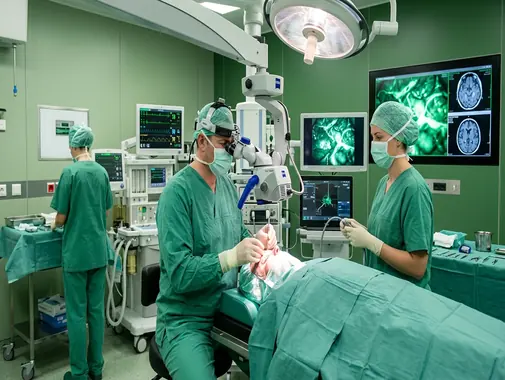
Specialized Surgical Care for the Brain, Spine & Nervous System
The Neurosurgery Department at AS Medical Complex provides specialized assessment, surgical consultation, treatment planning, and follow-up care for conditions affecting the brain, spinal cord, spine, and peripheral nerves.
Neurosurgery deals with conditions of the nervous system that may require surgical treatment, while also determining when surgery is not necessary. Many patients with spine or neurological problems can initially be managed with medication, physiotherapy, observation, rehabilitation, or other non-surgical approaches.
Our neurosurgical team evaluates each patient individually and considers symptoms, neurological examination, imaging findings, overall health, and previous treatment before recommending the most appropriate management plan.
The reference Neurosurgery department similarly identifies brain tumors, spinal disorders, neurovascular diseases, peripheral nerve injuries, and other neurological conditions as major areas of neurosurgical care.
Our Neurosurgery Services
The Neurosurgery Department at AS Medical Complex may provide assessment and management for:
-
Brain tumors
-
Spinal tumors
-
Brain cysts and other intracranial lesions
-
Herniated or slipped discs
-
Cervical disc disease
-
Lumbar disc disease
-
Spinal stenosis
-
Spinal cord compression
-
Sciatica requiring surgical assessment
-
Cervical myelopathy
-
Nerve-root compression
-
Persistent neck or back pain with neurological symptoms
-
Brain and spinal trauma
-
Head injuries
-
Skull abnormalities
-
Spinal injuries
-
Hydrocephalus
-
Cerebral aneurysms
-
Selected cerebrovascular disorders
-
Arteriovenous malformations
-
Intracranial bleeding requiring neurosurgical assessment
-
Peripheral nerve compression and injury
-
Selected congenital neurological conditions
-
Chiari malformation
-
Neurosurgical emergencies
-
Neurosurgical second opinions
-
Postoperative neurosurgical follow-up
-
Coordination of neurological rehabilitation
The exact surgical procedures available depend on the patient's diagnosis, specialist assessment, and facilities available at AS Medical Complex.
Brain Tumors
Brain tumors can arise from brain tissue or surrounding structures or may spread to the brain from another part of the body.
Symptoms vary depending on the tumor's:
-
Location
-
Size
-
Rate of growth
-
Effect on surrounding brain tissue
Possible symptoms may include:
-
Persistent or progressively worsening headache
-
Seizures
-
Weakness in an arm or leg
-
Changes in speech
-
Vision problems
-
Difficulty walking
-
Balance problems
-
Personality or behavioral changes
-
Memory or cognitive changes
-
Nausea or vomiting
-
Other neurological symptoms
Brain tumors are commonly evaluated with imaging such as MRI or CT. When surgical treatment is appropriate, one important objective is to obtain diagnosis and remove as much abnormal tissue as safely possible while preserving important neurological function.
Brain Tumor Surgery
Surgery may be considered to:
-
Obtain tissue for diagnosis
-
Remove all or part of a tumor
-
Reduce pressure inside the skull
-
Relieve neurological symptoms
-
Improve access for additional treatment
-
Establish the exact tumor type through pathology
The surgical approach depends on the tumor's location and relationship to important brain structures.
Possible procedures may include:
-
Craniotomy
-
Tumor resection
-
Stereotactic biopsy
-
Other specialized neurosurgical techniques where appropriate
A stereotactic brain biopsy allows a small tissue sample to be obtained from a brain lesion for pathological diagnosis when complete removal is not appropriate or when tissue confirmation is required before further treatment.
Multidisciplinary Brain Tumor Care
Brain tumors often require care from several specialties.
Depending on the diagnosis, neurosurgical treatment may be coordinated with:
-
Neurology
-
Oncology
-
Radiology
-
Pathology
-
Radiation Oncology
-
Endocrinology
-
Physiotherapy
-
Speech and Language Pathology
-
Psychology
-
Other relevant specialties
After surgery, the pathology result helps determine whether additional treatment or monitoring is required.
Meningioma & Other Intracranial Tumors
Meningiomas develop from tissues surrounding the brain and spinal cord and can occur in several intracranial locations.
Some are discovered incidentally, while others may produce symptoms because of their location or pressure on nearby structures.
Depending on the case, management may involve:
-
Observation
-
Repeat imaging
-
Neurosurgical removal
-
Other specialized treatment
Not every brain lesion automatically requires surgery. The decision depends on factors such as size, location, symptoms, growth, age, and overall health.
Spinal Neurosurgery
Spinal neurosurgery focuses on conditions affecting the:
-
Vertebral column
-
Intervertebral discs
-
Spinal cord
-
Nerve roots
-
Supporting spinal structures
Patients may be referred for neurosurgical assessment because of:
-
Severe or persistent back pain
-
Neck pain
-
Pain radiating into an arm or leg
-
Numbness
-
Tingling
-
Muscle weakness
-
Difficulty walking
-
Loss of coordination
-
Spinal cord compression
-
Progressive neurological symptoms
Most back pain does not require surgery. AANS guidance notes that conservative treatment is generally considered first for many spinal problems, while worsening neurological deficits or failure of appropriate non-surgical treatment may lead to surgical evaluation.
Herniated Disc
A herniated disc occurs when material from an intervertebral disc moves beyond its normal position and may irritate or compress nearby nerves.
It can occur in the:
-
Cervical spine
-
Thoracic spine
-
Lumbar spine
Possible symptoms include:
-
Back or neck pain
-
Pain radiating into an arm or leg
-
Sciatica
-
Numbness
-
Tingling
-
Muscle weakness
-
Reduced reflexes
-
Difficulty walking in severe cases
Initial management is often non-surgical. Surgery may be considered when there is significant nerve compression, progressive weakness, severe persistent symptoms, or other concerning neurological findings.
Lumbar Disc Disease & Sciatica
Lumbar disc disease can compress nerves supplying the legs.
Patients may experience:
-
Lower-back pain
-
Buttock pain
-
Leg pain
-
Sciatica
-
Tingling
-
Numbness
-
Weakness
-
Difficulty walking or standing
Assessment may involve:
-
Neurological examination
-
MRI
-
CT where appropriate
-
X-Ray
-
Nerve studies in selected cases
Treatment may initially involve medication, activity modification, physiotherapy, rehabilitation, or other conservative measures.
If symptoms remain severe or neurological function is worsening, surgical assessment may be required.
Cervical Disc Disease
Cervical disc problems can affect nerve roots or the spinal cord in the neck.
Patients may experience:
-
Neck pain
-
Shoulder pain
-
Arm pain
-
Hand numbness
-
Tingling
-
Weakness
-
Reduced hand coordination
-
Difficulty walking
-
Balance problems
When cervical spinal-cord compression is significant, treatment may involve surgical decompression and, in selected patients, spinal fusion or another procedure.
Spinal Stenosis
Spinal stenosis refers to narrowing around the spinal cord or nerve roots.
It commonly affects the cervical or lumbar spine.
Symptoms may include:
-
Back or neck pain
-
Leg pain
-
Numbness
-
Tingling
-
Weakness
-
Difficulty standing
-
Difficulty walking
-
Reduced walking distance
-
Balance problems
For lumbar spinal stenosis requiring surgery, procedures such as decompressive laminectomy may be used to create more space for compressed nerves. Fusion may also be considered when spinal instability is present.
Spinal Decompression
Spinal decompression aims to relieve pressure on the spinal cord or nerve roots.
Depending on the condition, procedures may include:
-
Laminectomy
-
Laminotomy
-
Foraminotomy
-
Discectomy
-
Other decompressive procedures
AANS notes that minimally invasive approaches may be possible for selected disc and spinal-stenosis procedures, although suitability depends on the individual condition and surgical requirements.
Spinal Fusion
Spinal fusion may be recommended in selected patients when additional stability is required.
Possible indications may include certain cases involving:
-
Spinal instability
-
Degenerative disease
-
Deformity
-
Severe disc disease
-
Spinal decompression requiring stabilization
-
Trauma
-
Other structural spinal problems
During fusion, two or more vertebral levels are stabilized to promote bone healing between them.
The decision to perform spinal fusion depends on imaging, neurological findings, symptoms, spinal stability, and the patient's overall condition.
Spinal Cord Compression
Compression of the spinal cord can result from:
-
Disc disease
-
Spinal stenosis
-
Tumors
-
Trauma
-
Infection
-
Bone abnormalities
-
Other structural conditions
Symptoms can include:
-
Limb weakness
-
Numbness
-
Tingling
-
Difficulty walking
-
Poor coordination
-
Balance problems
-
Loss of hand dexterity
-
Bladder or bowel dysfunction in severe cases
Progressive spinal-cord compression requires prompt medical assessment because neurological function may deteriorate if significant compression continues.
Cauda Equina Syndrome
Cauda Equina Syndrome is a serious neurological condition caused by severe compression of nerve roots at the lower end of the spinal canal.
Warning signs may include:
-
Severe lower-back pain
-
Progressive leg weakness
-
Numbness around the inner thighs or genital area
-
Loss of bladder control
-
Difficulty passing urine
-
Loss of bowel control
-
Significant changes in sexual function
Cauda equina syndrome is a neurosurgical emergency.
AANS advises urgent evaluation when these red-flag symptoms are present because prompt surgical decompression may improve neurological outcomes.
Hydrocephalus
Hydrocephalus occurs when excessive cerebrospinal fluid accumulates within the fluid-containing spaces of the brain.
It can occur in:
-
Infants
-
Children
-
Adults
-
Older adults
Symptoms depend on age and cause and may include:
-
Headache
-
Nausea or vomiting
-
Difficulty walking
-
Balance problems
-
Cognitive changes
-
Reduced consciousness in severe cases
-
Enlarging head size in infants
-
Other neurological changes
Diagnosis generally involves neurological assessment and brain imaging.
Hydrocephalus Surgery
Selected patients with hydrocephalus may require surgery to divert or restore the flow of cerebrospinal fluid.
Treatment may involve:
-
Ventricular shunt placement
-
Endoscopic procedures in selected cases
-
Other neurosurgical techniques
The appropriate treatment depends on:
-
Cause
-
Age
-
Pattern of cerebrospinal-fluid obstruction
-
Neurological condition
-
Imaging findings
Patients with a shunt may require long-term monitoring because shunt blockage, infection, or other complications can sometimes occur.
Cerebral Aneurysm
A cerebral aneurysm is a weakened area of a brain artery that forms an abnormal bulge.
Some aneurysms remain unruptured and are discovered incidentally, while a ruptured aneurysm can cause bleeding around the brain and represents a life-threatening emergency.
Possible symptoms of rupture may include:
-
Sudden extremely severe headache
-
Loss of consciousness
-
Vomiting
-
Neck stiffness
-
Seizures
-
Neurological weakness
-
Confusion
-
Other sudden neurological changes
A suspected ruptured aneurysm requires immediate emergency care.
Aneurysm Treatment
Depending on the aneurysm's:
-
Size
-
Shape
-
Location
-
Rupture status
-
Patient age
-
General health
-
Individual risk
treatment may involve observation or an intervention.
Options for appropriate patients may include:
-
Surgical clipping
-
Endovascular coiling
-
Other endovascular techniques
AANS describes clipping and coiling as established approaches used to secure ruptured aneurysms and reduce the risk of further bleeding.
Neurosurgical and neurovascular teams determine the most appropriate approach for each patient.
Cerebrovascular Neurosurgery
Neurosurgeons may participate in the management of selected conditions affecting blood vessels of the brain, including:
-
Cerebral aneurysms
-
Arteriovenous malformations
-
Cavernous malformations
-
Selected stroke-related conditions
-
Intracranial hemorrhage
-
Other cerebrovascular abnormalities
The treatment approach may involve:
-
Microsurgery
-
Endovascular procedures
-
Observation
-
Additional imaging
-
Multidisciplinary management
Care may require coordination between Neurosurgery, Neurology, Interventional Radiology, Critical Care, and other specialties.
Arteriovenous Malformations – AVMs
An arteriovenous malformation (AVM) is an abnormal connection between arteries and veins.
AVMs involving the brain may sometimes cause:
-
Headaches
-
Seizures
-
Neurological deficits
-
Intracranial bleeding
-
No symptoms before incidental discovery
Management depends on the lesion's size, location, vascular anatomy, previous bleeding, and patient-specific risk.
Selected patients may require surgical, endovascular, radiosurgical, or combined treatment.
Stroke & Neurosurgery
Most stroke care is primarily neurological and medical, but neurosurgeons may become involved in selected stroke cases.
Neurosurgical intervention may be required for:
-
Certain intracranial hemorrhages
-
Aneurysmal subarachnoid hemorrhage
-
Severe brain swelling
-
Hydrocephalus following bleeding
-
Selected vascular abnormalities
AANS describes procedures such as aneurysm clipping and, in certain cases, decompressive cranial surgery in the management of serious cerebrovascular events.
Sudden stroke symptoms require emergency medical evaluation.
Head Injury & Traumatic Brain Injury
Head injuries range from mild concussion to severe traumatic brain injury.
Neurosurgical assessment may be required when there is:
-
Intracranial bleeding
-
Skull fracture
-
Brain swelling
-
Reduced consciousness
-
Progressive neurological deterioration
-
Compression of brain structures
-
Penetrating head injury
-
Other significant abnormalities
Evaluation may include:
-
Neurological examination
-
CT head
-
MRI in selected cases
-
Continuous clinical monitoring
-
Other investigations
Some traumatic injuries require observation, while others may require urgent surgery.
Intracranial Hemorrhage
Bleeding within or around the brain can occur because of:
-
Trauma
-
Aneurysm rupture
-
High blood pressure
-
Vascular abnormalities
-
Blood-thinning medication
-
Other medical conditions
Symptoms may include:
-
Sudden severe headache
-
Weakness
-
Speech difficulty
-
Loss of consciousness
-
Seizures
-
Vomiting
-
Confusion
-
Neurological deterioration
Some forms of intracranial hemorrhage require urgent neurosurgical treatment to remove blood, relieve pressure, or treat the source of bleeding.
Craniotomy & Craniectomy
A craniotomy involves temporarily removing part of the skull to provide access to the brain.
It may be used for selected procedures involving:
-
Brain tumors
-
Cerebral aneurysms
-
Intracranial bleeding
-
Vascular abnormalities
-
Other brain conditions
The bone is generally replaced at the end of the operation.
A craniectomy involves removing part of the skull and temporarily leaving it off, which may be necessary in selected patients to relieve dangerous pressure caused by brain swelling.
The exact procedure depends on the patient's condition.
Spinal Tumors
Tumors can develop:
-
Within the spinal cord
-
Around the spinal cord
-
Within spinal nerve structures
-
In vertebral structures
Possible symptoms may include:
-
Persistent back or neck pain
-
Limb weakness
-
Numbness
-
Tingling
-
Difficulty walking
-
Balance problems
-
Progressive neurological deficits
-
Bladder or bowel problems in advanced compression
MRI is frequently important in evaluating suspected spinal tumors.
Management may involve:
-
Observation
-
Surgery
-
Biopsy
-
Oncology treatment
-
Radiation therapy
-
Combined treatment
The approach depends on tumor type, location, neurological symptoms, and overall health.
Peripheral Nerve Conditions
Neurosurgery may also involve selected problems affecting nerves outside the brain and spinal cord.
Conditions may include:
-
Peripheral nerve injuries
-
Nerve compression
-
Selected nerve tumors
-
Entrapment neuropathies
-
Other structural nerve abnormalities
Symptoms may include:
-
Pain
-
Numbness
-
Tingling
-
Weakness
-
Reduced hand or limb function
Assessment may involve neurological examination, nerve-conduction studies, EMG, ultrasound, MRI, or other investigations depending on the condition.
Chiari Malformation
Chiari malformation is a structural condition involving the lower part of the brain near the opening at the base of the skull.
It may sometimes be associated with:
-
Headache
-
Neck pain
-
Balance problems
-
Coordination problems
-
Numbness or weakness
-
Swallowing difficulty
-
Hydrocephalus
-
Other neurological symptoms
AANS notes that Chiari malformation may occur alongside conditions such as hydrocephalus and other developmental abnormalities.
Some patients require observation, while symptomatic cases with significant neurological or cerebrospinal-fluid problems may require neurosurgical treatment.
Diagnostic Evaluation in Neurosurgery
Neurosurgical assessment usually begins with:
-
Detailed medical history
-
Description of neurological symptoms
-
Physical examination
-
Neurological examination
-
Review of previous treatment
-
Review of imaging
Depending on the condition, investigations may include:
-
MRI brain
-
MRI spine
-
CT brain
-
CT spine
-
X-Ray
-
CT angiography
-
MR angiography
-
Conventional angiography
-
Nerve-conduction studies
-
Electromyography
-
Laboratory testing
-
Other specialized neurological investigations
The appropriate investigation depends on the suspected condition.
MRI in Neurosurgery
MRI provides detailed imaging of many neurological and spinal structures.
It may be used to evaluate:
-
Brain tumors
-
Spinal tumors
-
Disc disease
-
Spinal stenosis
-
Spinal cord compression
-
Multiple structural brain abnormalities
-
Nerve-root compression
-
Other neurological conditions
For lower-back conditions, AANS identifies MRI, CT, X-Ray, EMG and other diagnostic studies among tools that may be used when further assessment is required.
CT Scan in Neurosurgery
CT imaging can be particularly valuable in emergency neurological assessment.
It may help evaluate:
-
Head injury
-
Intracranial bleeding
-
Skull fractures
-
Acute neurological changes
-
Hydrocephalus
-
Selected spinal injuries
-
Bone abnormalities
The treating team determines whether CT, MRI, or another imaging technique is more appropriate.
When Is Neurosurgery Necessary?
A neurosurgical consultation does not automatically mean surgery will be recommended.
For many spinal problems, non-surgical treatment is considered first. Herniated-disc treatment, for example, commonly begins with conservative management unless neurological deficits or other urgent features are present.
Surgery may become appropriate when:
-
A structural problem is causing significant brain or nerve compression
-
Neurological function is worsening
-
Progressive weakness develops
-
A tumor requires biopsy or removal
-
Dangerous intracranial pressure develops
-
An aneurysm or vascular abnormality requires intervention
-
Spinal instability is present
-
Conservative treatment has failed in an appropriate surgical candidate
-
An emergency requires immediate decompression or other treatment
The expected benefits of surgery should always be weighed against possible risks.
Preparing for Neurosurgery
Before surgery, the medical team may review:
-
Medical history
-
Previous operations
-
Current medications
-
Blood-thinning medicines
-
Allergies
-
Diabetes
-
Heart disease
-
Kidney disease
-
Lung disease
-
Previous neurological conditions
-
Relevant laboratory results
-
MRI and CT findings
-
Anesthesia history
Additional assessment may be required from:
-
Anesthesia
-
Cardiology
-
General Medicine
-
Endocrinology
-
Nephrology
-
Other specialists
depending on the patient's overall health.
Neurosurgery & Anesthesia
Brain and spinal procedures require close coordination between the neurosurgeon and anesthesia team.
Anesthesia care may involve:
-
Pre-operative assessment
-
Airway management
-
Continuous cardiovascular monitoring
-
Neurological considerations
-
Blood and fluid management
-
Postoperative pain management
-
Recovery monitoring
-
Critical-care support when necessary
Complex neurosurgical procedures may require additional perioperative monitoring depending on the patient's condition.
Postoperative Neurosurgical Care
Recovery after neurosurgery varies significantly according to:
-
Type of surgery
-
Area of the nervous system involved
-
Pre-operative neurological condition
-
Patient age
-
Other medical conditions
-
Development of complications
-
Rehabilitation requirements
Postoperative care may include:
-
Neurological monitoring
-
Pain management
-
Wound care
-
Medication
-
Prevention of complications
-
Early mobilization where appropriate
-
Repeat imaging
-
Rehabilitation
-
Follow-up appointments
Patients and families should follow the specific discharge instructions provided by the neurosurgical team.
Rehabilitation After Neurosurgery
Some patients require rehabilitation after brain or spinal surgery.
Depending on their condition, rehabilitation may involve:
-
Physiotherapy
-
Gait training
-
Strength training
-
Balance rehabilitation
-
Speech and Language Therapy
-
Swallowing rehabilitation
-
Cognitive rehabilitation
-
Psychological support
-
Functional retraining
The aim is to help the patient recover as much independence and neurological function as possible.
Multidisciplinary Neurosurgical Care
Neurological surgical conditions can affect multiple aspects of health.
Depending on the diagnosis, Neurosurgery may coordinate care with:
-
Neurology
-
Radiology
-
Anesthesia
-
Critical Care
-
Oncology
-
Pathology
-
Orthopedics
-
Physiotherapy
-
Speech and Language Pathology
-
Psychology
-
Endocrinology
-
General Medicine
-
Other relevant specialties
This multidisciplinary approach is particularly important for complex brain tumors, spinal-cord conditions, stroke-related complications, and major neurological trauma.
When Should You Visit a Neurosurgeon?
You may consider neurosurgical assessment when you have:
-
A diagnosed brain tumor
-
A spinal tumor
-
A cerebral aneurysm
-
Hydrocephalus
-
A herniated disc with neurological symptoms
-
Progressive limb weakness
-
Persistent numbness or tingling associated with structural spine disease
-
Spinal stenosis
-
Significant spinal-cord compression
-
Persistent severe sciatica despite appropriate treatment
-
Significant cervical spinal disease
-
Brain or spinal trauma
-
A neurological condition for which surgery has been suggested
-
An abnormal MRI or CT requiring neurosurgical review
-
A need for a second opinion before brain or spine surgery
-
Persistent neurological deterioration linked to a surgically treatable condition
Neurologists, orthopedic specialists, emergency physicians, or other doctors may also refer patients to Neurosurgery when surgical evaluation is required.
When Is Emergency Neurosurgical Care Required?
Certain neurological symptoms require immediate emergency assessment.
Seek urgent medical care for:
-
Sudden weakness or paralysis
-
Sudden difficulty speaking
-
Sudden loss of consciousness
-
Severe head injury
-
Rapid decline in consciousness
-
Repeated seizures without recovery
-
Sudden extremely severe headache
-
Suspected ruptured cerebral aneurysm
-
Severe neurological deterioration
-
New loss of bladder or bowel control with severe back pain
-
Numbness around the genital or inner-thigh region
-
Rapidly progressive leg weakness
-
Significant brain or spinal trauma
Symptoms of cauda equina syndrome, including bladder or bowel dysfunction with saddle-region numbness or progressive leg weakness, require urgent surgical evaluation.
Similarly, a suddenly severe headache with loss of consciousness or neurological symptoms can occur with aneurysmal rupture and requires emergency assessment.
Long-Term Neurosurgical Follow-Up
Some neurosurgical conditions require ongoing monitoring even after treatment.
Regular follow-up may help the neurosurgeon:
-
Assess neurological recovery
-
Review postoperative symptoms
-
Monitor wounds
-
Review MRI or CT scans
-
Monitor tumor recurrence or progression
-
Assess spinal healing
-
Evaluate surgical implants where applicable
-
Identify postoperative complications
-
Coordinate rehabilitation
-
Determine whether additional treatment is required
At AS Medical Complex, our goal is to provide continuity of care from initial neurosurgical assessment through treatment, surgery when required, rehabilitation, and long-term follow-up.
Neurosurgery FAQs
What is Neurosurgery?
Neurosurgery is the surgical specialty concerned with disorders affecting the brain, spine, spinal cord, peripheral nerves, and related nervous-system structures. The Ali Medical reference department includes brain tumors, spinal disorders, neurovascular conditions, and peripheral nerve injuries within its neurosurgical scope.
Does seeing a neurosurgeon mean I need surgery?
No. A neurosurgeon evaluates whether a neurological or spinal problem is surgically treatable and whether surgery is actually necessary. Many conditions—particularly disc-related back and neck problems—may initially be treated without surgery.
What conditions does a neurosurgeon treat?
Neurosurgeons may treat brain tumors, spinal tumors, herniated discs, spinal stenosis, spinal-cord compression, hydrocephalus, cerebral aneurysms, brain and spinal injuries, peripheral nerve disorders, and other conditions requiring surgical nervous-system care.
When might a slipped disc require surgery?
Many herniated discs can initially be treated conservatively. Surgery may be considered when symptoms remain severe despite appropriate treatment or when there is significant or progressive neurological weakness or nerve compression.
What tests does a neurosurgeon usually review?
Depending on the condition, neurosurgical assessment may involve MRI, CT, X-Ray, angiographic imaging, nerve-conduction studies, EMG, laboratory tests, and other specialized investigations. For spinal symptoms, MRI and CT are among the commonly used diagnostic studies when additional evaluation is needed.
What is hydrocephalus?
Hydrocephalus occurs when excessive cerebrospinal fluid accumulates within the fluid-containing cavities of the brain. Some patients require neurosurgical treatment to manage the abnormal fluid buildup.
Which neurological symptoms require emergency care?
Sudden paralysis or weakness, severe head injury, sudden loss of consciousness, a sudden extremely severe headache, severe neurological deterioration, or new bladder/bowel dysfunction associated with back pain and leg weakness require urgent medical assessment. Cauda equina syndrome in particular requires prompt neurosurgical evaluation.
Sudden paralysis or weakness, severe head injury, sudden loss of consciousness, a sudden extremely severe headache, severe neurological deterioration, or new bladder/bowel dysfunction associated with back pain and leg weakness require urgent medical assessment. Cauda equina syndrome in particular requires prompt neurosurgical evaluation.
Neurosurgery Care at AS Medical Complex
The Neurosurgery Department at AS Medical Complex is committed to providing comprehensive, patient-focused assessment and surgical care for conditions affecting the brain, spine, spinal cord, and peripheral nervous system.
From herniated discs, spinal stenosis, nerve compression, and spinal-cord disorders to brain tumors, hydrocephalus, cerebral aneurysms, neurological trauma, and complex neurosurgical conditions, our goal is to provide appropriate diagnosis, careful surgical evaluation, individualized treatment planning, postoperative care, and coordinated rehabilitation.
Book an appointment with our Neurosurgery Department for brain and spine assessment, slipped-disc and spinal-stenosis evaluation, brain-tumor consultation, hydrocephalus care, neurovascular assessment, neurological trauma follow-up, and specialist neurosurgical consultation.