
Recovery Room at AS Medical Complex
Contact hospital
- Availability
Contact hospital
- Booking
WhatsApp / call
- Location
Islamabad
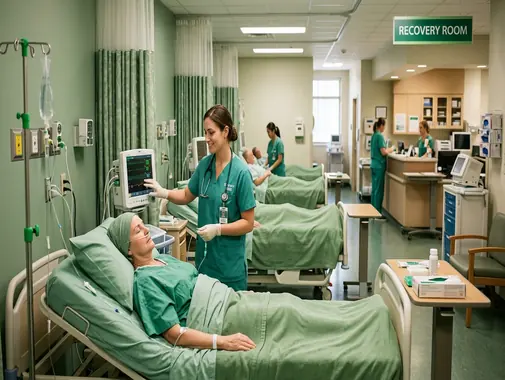
Safe Post-Anesthesia Monitoring & Immediate Postoperative Care
The Recovery Room at AS Medical Complex, also known as the Post-Anesthesia Care Unit – PACU, is designed to provide close monitoring and immediate postoperative care for patients recovering from anesthesia, sedation, and surgical or procedural treatment.
After an operation or procedure, the patient does not usually move directly from the Operating Theatre to a routine hospital room.
Anesthesia, surgery, pain medicines, blood loss, fluids, and the procedure itself can temporarily affect:
-
Breathing
-
Oxygen levels
-
Blood pressure
-
Heart rate
-
Consciousness
-
Body temperature
-
Pain
-
Nausea and vomiting
-
Mobility
-
Other important body functions
The Recovery Room provides an appropriate environment for patients to wake from anesthesia while trained clinical staff monitor these areas and identify complications early.
The American Society of Anesthesiologists recommends post-anesthesia monitoring with particular attention to oxygenation, ventilation, circulation, consciousness, and temperature throughout the recovery period.
Patients may remain in the Recovery Room until they are sufficiently stable to:
-
Return to an inpatient ward
-
Move to a High Dependency Unit
-
Move to the Intensive Care Unit if higher-level support is required
-
Continue through a day-surgery discharge pathway when clinically appropriate
The required destination depends on the patient's condition rather than a fixed recovery-room time.
Our Recovery Room Services
Depending on the procedure, type of anesthesia, patient condition, and confirmed facilities at AS Medical Complex, Recovery Room services may include:
-
Post-anesthesia monitoring
-
Recovery after general anesthesia
-
Recovery after regional anesthesia
-
Recovery after selected sedation procedures
-
Immediate postoperative nursing care
-
Oxygen-saturation monitoring
-
Respiratory monitoring
-
Heart-rate monitoring
-
Blood-pressure monitoring
-
Temperature monitoring
-
Level-of-consciousness assessment
-
Pain assessment and management
-
Nausea and vomiting assessment
-
Oxygen therapy where clinically indicated
-
Airway observation and support
-
IV fluid monitoring
-
Surgical-site observation
-
Drain monitoring where applicable
-
Assessment for postoperative bleeding
-
Medication administration
-
Blood-glucose monitoring where indicated
-
Neurological observation where appropriate
-
Monitoring after selected endoscopic or procedural sedation
-
Communication with the Anesthesia and surgical teams
-
Escalation to HDU or ICU if required
-
Safe transfer to an inpatient ward
-
Assessment for discharge after day procedures where clinically appropriate
Exact staffing ratios, monitoring technology, individual devices, and advanced postoperative interventions should only be promoted after the operational capabilities of the AS Medical Complex Recovery Room have been confirmed.
What Happens in the Recovery Room?
When surgery or another anesthetic procedure is completed, responsibility for the patient's immediate postoperative care is transferred from the Operating Theatre team to the Recovery Room team.
An appropriate clinical handover may include information about:
-
Procedure performed
-
Type of anesthesia
-
Airway management
-
Relevant medical conditions
-
Medication given
-
Allergies
-
IV fluids
-
Estimated blood loss
-
Pain treatment
-
Surgical drains
-
Significant events during surgery
-
Postoperative instructions
-
Areas requiring particular monitoring
Structured communication is important because the patient's condition and treatment plan must transfer safely from the Operating Theatre into postoperative care.
The patient is then observed as the effects of anesthesia gradually decrease.
Some patients wake quickly.
Others may remain:
-
Sleepy
-
Confused
-
Cold
-
Nauseated
-
Uncomfortable
-
Temporarily dependent on supplemental oxygen
for a period after anesthesia.
Recovery varies according to the type of surgery, anesthetic medicines, age, existing medical conditions, and individual response.
Monitoring After Anesthesia
Close monitoring is one of the central purposes of a Recovery Room.
ASA post-anesthesia standards specifically call for evaluation of the patient's oxygenation, ventilation, circulation, level of consciousness, and temperature during recovery.
Clinical monitoring may therefore include:
-
Oxygen saturation
-
Respiratory rate
-
Breathing pattern
-
Airway condition
-
Heart rate
-
Cardiac rhythm where indicated
-
Blood pressure
-
Temperature
-
Consciousness
-
Pain
-
Surgical wound
-
Drain output
-
IV fluids
-
Other procedure-specific observations
Monitoring frequency depends on the patient's condition.
A patient who is awake, breathing comfortably, and hemodynamically stable may require a different level of observation from someone who remains deeply drowsy or has:
-
Low oxygen levels
-
Abnormal blood pressure
-
Significant pain
-
Bleeding
-
Breathing difficulty
-
Another postoperative concern
Patients who do not recover as expected require further medical assessment rather than simply remaining in the Recovery Room without investigation.
Airway, Breathing & Oxygen Support
Breathing is particularly important immediately after anesthesia.
General anesthetic agents, sedatives, opioid pain medicines, residual muscle-relaxing medicines, and the effects of surgery can influence respiratory function.
Recovery Room staff therefore assess whether the patient:
-
Has a clear airway
-
Is breathing adequately
-
Has an acceptable oxygen level
-
Requires supplemental oxygen
-
Shows signs of airway obstruction
-
Is excessively sedated
ASA standards require evaluation of both oxygenation and ventilation during post-anesthesia recovery.
Depending on clinical need and available equipment, management may involve:
-
Position adjustment
-
Supplemental oxygen
-
Airway-opening measures
-
Suction where appropriate
-
Additional anesthesia review
-
Other respiratory support
A patient with significant or persistent respiratory failure may require escalation to:
-
HDU
-
ICU
-
Another appropriate critical-care environment
rather than routine ward transfer.
Pain, Nausea & Other Common Recovery Problems
The immediate postoperative period often involves active management of symptoms as well as monitoring.
Postoperative Pain
Pain should be assessed during recovery and treated according to:
-
Type of surgery
-
Severity of pain
-
Previous medication
-
Patient age
-
Kidney and liver function
-
Breathing
-
Other medical factors
Pain treatment may involve appropriate combinations of:
-
Analgesic medicines
-
Regional or local-anesthetic techniques
-
Non-opioid treatment
-
Opioid medication where clinically indicated
-
Other multimodal pain-control approaches
Pain medicines must be balanced with safety because some treatments, particularly sedating medicines and opioids, can affect:
-
Breathing
-
Alertness
-
Blood pressure
-
Nausea
The Joint Commission emphasizes defined pain assessment and reassessment, individualized treatment strategies, multimodal approaches, and monitoring of patients at increased risk of adverse medication outcomes.
Nausea & Vomiting
Some patients experience nausea or vomiting after anesthesia.
The clinical team may assess:
-
Severity
-
Hydration
-
Medication received
-
Type of procedure
-
Other contributing factors
and provide appropriate anti-nausea treatment where required.
Persistent vomiting may delay:
-
Oral fluids
-
Food
-
Mobility
-
Ward transfer
-
Day-surgery discharge
until the patient is sufficiently stable.
Shivering & Temperature
Patients can sometimes feel cold or shiver after surgery.
Recovery Room monitoring includes attention to body temperature, and warming measures may be used where clinically appropriate. ASA specifically includes temperature among the important parameters requiring assessment during post-anesthetic recovery.
Surgical Site, Bleeding & Circulation
Recovery Room staff also monitor the immediate effects of the surgical procedure.
Assessment may include:
-
Surgical dressing
-
Visible bleeding
-
Drain output
-
Swelling
-
Blood pressure
-
Heart rate
-
Peripheral circulation
-
Other procedure-specific findings
A small amount of expected drainage after some procedures may not represent a complication.
However, significant or increasing bleeding can be serious.
Concerning findings may include:
-
Rapidly soaking dressings
-
Large drain output
-
Falling blood pressure
-
Rapid heart rate
-
Increasing pallor
-
Reduced responsiveness
-
Other signs of circulatory deterioration
These findings require prompt surgical and Anesthesia review.
Depending on the cause and severity, further treatment can involve:
-
IV fluids
-
Laboratory testing
-
Blood Bank support
-
Blood transfusion where indicated
-
Imaging
-
Return to the Operating Theatre
-
HDU or ICU admission
-
Other treatment
The Recovery Room therefore functions as an important early detection point for postoperative complications.
Recovery After Different Types of Anesthesia
The recovery process depends partly on the type of anesthesia used.
General Anesthesia
After general anesthesia, patients may initially be:
-
Sleepy
-
Disoriented
-
Nauseated
-
Cold
-
Temporarily dependent on oxygen
The clinical team monitors the patient while consciousness, breathing, circulation, and protective reflexes recover.
Regional Anesthesia
Regional techniques may include spinal, epidural, or nerve-block anesthesia.
A patient may be fully awake but temporarily have:
-
Numbness
-
Weakness
-
Reduced movement
-
Altered sensation
in the anesthetized area.
The Recovery Room team monitors the patient's general condition and return of appropriate function according to the procedure and anesthetic technique.
Sedation
Patients receiving sedation for selected procedures may appear awake relatively quickly but can still experience:
-
Reduced alertness
-
Impaired coordination
-
Temporary memory effects
-
Respiratory depression
depending on the medicines used.
Appropriate post-anesthesia observation remains necessary after anesthesia or significant procedural sedation. ASA standards state that patients receiving anesthesia care should receive appropriate post-anesthesia management.
Higher-Risk Patients & Postoperative Complications
Some patients require particularly careful postoperative monitoring because their risk is increased by:
-
Older age
-
Significant heart disease
-
Lung disease
-
Obstructive sleep apnea
-
Obesity
-
Kidney or liver disease
-
Diabetes
-
Major surgery
-
Significant blood loss
-
Emergency surgery
-
Long procedures
-
Previous anesthesia complications
-
Other medical conditions
The Anesthesia and surgical teams determine what level of postoperative monitoring is required.
Potential immediate postoperative complications can include:
-
Airway obstruction
-
Low oxygen levels
-
Respiratory depression
-
Low or high blood pressure
-
Abnormal heart rhythm
-
Significant bleeding
-
Severe pain
-
Persistent nausea or vomiting
-
Delayed awakening
-
Allergic or medication-related reactions
-
Other procedure-specific complications
The purpose of the Recovery Room is to identify and manage these problems before transferring the patient to an area with less intensive monitoring.
A patient whose condition exceeds Recovery Room capability should be escalated appropriately rather than transferred prematurely to a routine ward.
Recovery Room After Major Surgery
Some operations have a greater likelihood of requiring enhanced postoperative care.
Patients undergoing major:
-
Abdominal surgery
-
Orthopedic surgery
-
Neurosurgery
-
Urological surgery
-
Gynecological surgery
-
Other significant procedures
may require additional postoperative observation according to their condition.
After recovery from anesthesia, the patient may be transferred to:
-
Surgical ward
-
Medical ward
-
HDU
-
ICU
depending on:
-
Breathing
-
Circulation
-
Consciousness
-
Blood loss
-
Medical comorbidities
-
Surgical complexity
-
Required monitoring
Not every major surgical patient requires ICU or HDU.
The level of care should be determined individually.
Day Surgery & Discharge From the Recovery Room
Some procedures may be performed through a day-surgery pathway, meaning that an appropriately selected patient can return home after sufficient recovery rather than remaining in hospital overnight.
However, completion of surgery does not automatically mean the patient is ready to leave.
Discharge from post-anesthesia care should be based on appropriate clinical assessment. ASA standards state that responsibility for discharge from the post-anesthesia care area rests with a physician or another process established according to approved discharge criteria and institutional policy.
Depending on the procedure, the team may consider:
-
Consciousness
-
Airway
-
Breathing
-
Oxygen level
-
Blood pressure
-
Heart rate
-
Pain control
-
Nausea and vomiting
-
Surgical bleeding
-
Mobility where relevant
-
Other clinical factors
before deciding the next destination.
Going Home After Anesthesia
Patients discharged home after anesthesia or sedation should follow the specific instructions provided by their surgical and Anesthesia teams.
Depending on the type of anesthesia and procedure, temporary impairment in:
-
Judgment
-
Coordination
-
Reaction time
-
Alertness
may continue even after the patient feels more awake.
Patients should therefore follow individual discharge instructions regarding:
-
Driving
-
Operating machinery
-
Alcohol
-
Sedating medicines
-
Food and fluids
-
Physical activity
-
Wound care
-
Prescribed medication
-
Follow-up
A responsible adult may be required to accompany the patient according to the procedure and hospital policy.
Transfer to the Ward, HDU or ICU
The Recovery Room is usually a temporary stage within the surgical pathway.
Patients move onward once their condition and required level of monitoring are clear.
Transfer to an Inpatient Ward
A patient may be transferred to a medical or surgical ward when:
-
Airway is satisfactory
-
Breathing is sufficiently stable
-
Circulation is stable
-
Consciousness has appropriately recovered
-
Pain is adequately controlled
-
Major postoperative complications have not been identified
-
The required level of care can safely be provided on the ward
according to the clinical team's assessment.
Transfer to HDU
HDU may be appropriate when a patient no longer requires immediate post-anesthesia recovery but still needs:
-
Closer observation
-
Enhanced respiratory monitoring
-
More intensive cardiovascular monitoring
-
Higher nursing dependency
-
Other high-dependency care
than a normal ward can provide.
Transfer to ICU
ICU assessment may be required when the patient needs:
-
Advanced airway support
-
Invasive mechanical ventilation
-
Severe shock management
-
Advanced cardiovascular support
-
Multiple-organ support
-
Other intensive-care treatment
A planned ICU admission may also have been arranged before surgery for selected high-risk patients.
Recovery Room staff should not delay escalation when the patient shows serious postoperative deterioration.
Family Communication & Visiting the Recovery Room
Families are understandably eager to see a patient immediately after surgery.
However, Recovery Rooms are active clinical environments where:
-
Patients are waking from anesthesia.
-
Staff are monitoring several patients.
-
Privacy must be protected.
-
Procedures may be performed.
-
Emergency treatment may occasionally be required.
Visitor access may therefore be limited according to:
-
Patient condition
-
Recovery Room policy
-
Clinical workload
-
Infection-control considerations
-
Privacy
-
Other safety requirements
The surgical or Anesthesia team can communicate relevant updates to the family according to hospital procedures and patient consent.
A temporary delay in seeing the patient does not necessarily mean that a complication has occurred.
Some patients simply require additional time to recover from anesthesia.
Preparation Before Surgery Helps Recovery
Safe postoperative recovery begins before the operation.
Patients should provide accurate information during their preoperative and Anesthesia assessment.
Important information includes:
-
Current medicines
-
Blood thinners
-
Diabetes treatment
-
Medication allergies
-
Previous anesthesia problems
-
Heart disease
-
Lung disease
-
Kidney disease
-
Sleep apnea
-
Pregnancy where relevant
-
Previous surgery
-
Smoking
-
Other important medical conditions
Patients should also follow instructions regarding:
-
Fasting
-
Medication adjustments
-
Arrival time
-
Required Laboratory testing
-
Other preoperative preparation
Do not independently stop important prescribed medicines before surgery unless instructed by the treating team.
When Is Urgent Postoperative Escalation Required?
While many patients recover without major difficulty, some postoperative changes require immediate medical attention.
Examples include:
-
Severe breathing difficulty
-
Persistent low oxygen level
-
Airway obstruction
-
Failure to regain expected consciousness
-
Severe chest pain
-
Major bleeding
-
Severe fall in blood pressure
-
Significant abnormal heart rhythm
-
New neurological weakness
-
Seizure
-
Severe allergic reaction
-
Other rapid deterioration
These patients may require immediate:
-
Anesthesia review
-
Surgical review
-
Emergency treatment
-
Laboratory or imaging investigations
-
HDU care
-
ICU care
-
Return to the Operating Theatre
depending on the cause.
The Recovery Room exists in part to detect these complications while patients are still under close postoperative observation.
Multidisciplinary Recovery Room Care
Safe postoperative recovery requires coordination between several hospital teams.
Depending on the procedure and patient's condition, the Recovery Room pathway at AS Medical Complex may involve:
-
Anesthesia
-
Surgical team
-
Recovery Room nursing staff
-
General & Laparoscopic Surgery
-
Orthopedics
-
Neurosurgery
-
Urology
-
Gynecology & Obstetrics
-
ENT
-
Other surgical specialties
-
Pharmacy
-
Laboratory
-
Radiology
-
Blood Bank
-
HDU
-
ICU
-
Physiotherapy
-
Other relevant services
The Recovery Room provides the bridge between anesthesia and surgery on one side and continued inpatient or outpatient recovery on the other.
The key clinical question is not simply whether the patient is awake.
The team must determine whether the patient has recovered sufficiently from anesthesia and immediate surgical effects to move safely to the next level of care.
Recovery Room FAQs
What is a Recovery Room?
A Recovery Room, also known as a Post-Anesthesia Care Unit or PACU, is a specialized area where patients are closely monitored immediately after surgery, anesthesia, or selected sedated procedures. Monitoring focuses particularly on breathing, oxygenation, circulation, consciousness, temperature, pain, and immediate postoperative complications. ASA standards specifically identify oxygenation, ventilation, circulation, consciousness, and temperature as important components of post-anesthesia assessment.
How long will I stay in the Recovery Room?
There is no fixed recovery time for every patient. The duration depends on the type of anesthesia, procedure, age, medical conditions, pain, breathing, consciousness, nausea, blood pressure, and overall recovery. Patients should remain under appropriate post-anesthesia care until they meet the clinical criteria for transfer or discharge rather than leaving after a predetermined number of minutes.
Why do I need monitoring after the operation is already finished?
The effects of anesthesia and surgery can continue after the procedure ends. Breathing, oxygen levels, blood pressure, consciousness, pain, temperature, bleeding, and other functions can change during early recovery. Close observation allows complications to be recognized and treated before the patient moves to an area with less intensive monitoring.
Is it normal to feel sleepy, nauseated, cold, or uncomfortable after anesthesia?
These symptoms can occur during postoperative recovery, although their severity varies between patients. The Recovery Room team assesses the patient, treats symptoms when clinically appropriate, and determines whether another problem may be contributing. Persistent or severe symptoms require further assessment rather than being assumed to be a routine effect of anesthesia.
Can my family visit me in the Recovery Room?
Visitor access may be limited because the Recovery Room is an active clinical area where patients require monitoring, procedures, privacy, and sometimes emergency treatment. Family communication and visiting arrangements depend on the patient's condition and current AS Medical Complex policy.
What happens if I do not recover normally after anesthesia?
The Anesthesia and surgical teams can reassess the patient and investigate the cause. Significant breathing problems, major bleeding, unstable blood pressure, delayed awakening, neurological changes, or other complications may require additional treatment and possibly transfer to HDU or ICU. Patients should only move from post-anesthesia care when the receiving level of care is appropriate for their condition.
Can I go directly home after leaving the Recovery Room?
Some appropriately selected patients undergoing day procedures may be discharged home after meeting clinical discharge criteria. Others require admission to a ward, HDU, or ICU. Patients discharged after anesthesia should follow their specific instructions regarding driving, activity, medication, eating and drinking, wound care, supervision, and follow-up. The decision is based on the procedure, anesthesia, recovery, and overall medical condition rather than simply whether the patient feels awake.
-
Recovery Room at AS Medical Complex
The Recovery Room at AS Medical Complex is designed to provide safe, closely monitored care during the important period between completion of surgery or anesthesia and the patient's transfer to the next stage of recovery.
Post-anesthesia care focuses on:
-
Airway and breathing
-
Oxygen levels
-
Circulation and blood pressure
-
Consciousness
-
Temperature
-
Pain management
-
Nausea and vomiting
-
Surgical-site observation
-
Early identification of postoperative complications
-
Safe transfer to the appropriate level of care
ASA standards emphasize that post-anesthesia patients require ongoing evaluation, particularly of oxygenation, ventilation, circulation, consciousness, and temperature, before leaving the post-anesthesia care environment.
Pain should also be assessed and reassessed using an individualized approach, with attention to both effective relief and medication-related risks.
At AS Medical Complex, Recovery Room care can be coordinated with Anesthesia, Operating Theatre, surgical specialties, Laboratory, Radiology, Pharmacy, Blood Bank, HDU, ICU, inpatient wards, and other relevant departments according to the patient's procedure and postoperative condition.
The Recovery Room should not be described merely as a waiting area after surgery. It is a clinically monitored environment responsible for identifying whether the patient has recovered adequately from anesthesia and immediate surgical effects—and whether the safest next destination is a routine ward, HDU, ICU, or discharge pathway.
Patients undergoing surgery or procedures requiring anesthesia at AS Medical Complex can receive appropriate immediate postoperative monitoring and recovery care before transfer to their next stage of treatment. If significant breathing difficulty, unstable circulation, major bleeding, delayed recovery, or another serious complication develops, the patient can be reassessed promptly and escalated to the appropriate level of hospital care.
-