Ortho and Spine Surgery at AS Medical Complex
Contact hospital
- Availability
Contact hospital
- Booking
WhatsApp / call
- Location
Islamabad
Specialized Orthopedic & Spine Care for Back, Neck, Joint and Spinal Disorders
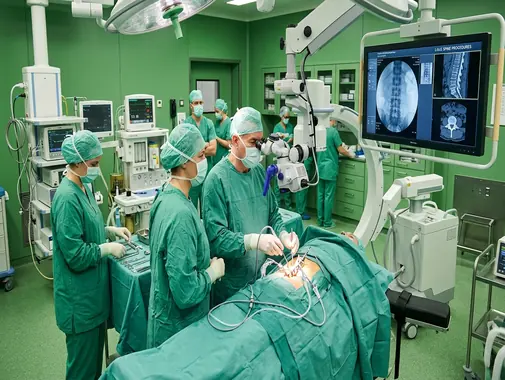
The Ortho & Spine Surgery Department at AS Medical Complex provides specialized evaluation, non-surgical management, surgical consultation, operative treatment, and rehabilitation for conditions affecting the spine, bones, joints, spinal nerves, muscles, ligaments, and other musculoskeletal structures.
Spine disorders can cause much more than back or neck pain. Compression or damage involving spinal nerves or the spinal cord may lead to pain traveling into the arms or legs, numbness, tingling, weakness, difficulty walking, balance problems, or other neurological symptoms.
Spine surgeons may be orthopedic surgeons or neurosurgeons who have dedicated training and clinical practice focused on spinal conditions. Common problems managed by spine specialists include degenerative disc disease, herniated discs, spinal fractures, scoliosis, infections, tumors, and conditions involving nerve or spinal-cord compression.
The Ali Medical reference department similarly identifies conditions such as herniated discs, spinal stenosis, degenerative disc disease, scoliosis, kyphosis, spinal tumors, and spinal infections, along with minimally invasive surgery and rehabilitation.
At AS Medical Complex, our goal is to identify the actual cause of musculoskeletal or spinal symptoms and determine whether the patient is best treated with medication, physiotherapy, rehabilitation, spinal injections where appropriate, observation, or surgery.
Our Ortho & Spine Surgery Services
The Ortho & Spine Surgery Department at AS Medical Complex may provide assessment and management for:
-
Back pain
-
Chronic lower-back pain
-
Neck pain
-
Cervical spine disorders
-
Lumbar spine disorders
-
Thoracic spine disorders
-
Degenerative disc disease
-
Herniated or slipped discs
-
Bulging discs
-
Sciatica
-
Cervical radiculopathy
-
Lumbar radiculopathy
-
Spinal stenosis
-
Foraminal stenosis
-
Nerve-root compression
-
Spinal-cord compression
-
Cervical myelopathy
-
Spondylosis
-
Spondylolisthesis
-
Scoliosis
-
Kyphosis
-
Other spinal deformities
-
Spinal fractures
-
Vertebral compression fractures
-
Osteoporotic spinal fractures
-
Spine trauma
-
Spinal instability
-
Spinal tumors
-
Selected spinal infections
-
Discitis
-
Vertebral osteomyelitis
-
Persistent pain after previous spinal surgery
-
Orthopedic trauma
-
Joint disorders
-
Arthritis
-
Hip disorders
-
Knee disorders
-
Shoulder disorders
-
Joint-replacement consultation
-
Minimally invasive spine surgery assessment
-
Spinal decompression
-
Discectomy
-
Microdiscectomy
-
Laminectomy
-
Laminotomy
-
Spinal fusion
-
Instrumented spinal stabilization
-
Selected deformity-correction procedures
-
Rehabilitation after orthopedic or spine surgery
-
Spine-surgery second opinions
-
Long-term postoperative follow-up
The specific procedures available depend on the patient's diagnosis, surgeon expertise, and facilities available at AS Medical Complex.
Understanding the Spine
The spine is made up of bones called vertebrae, with discs positioned between many of the vertebral bodies.
It is divided into:
-
Cervical spine – neck
-
Thoracic spine – upper and middle back
-
Lumbar spine – lower back
-
Sacral region
-
Coccygeal region
The spine provides:
-
Structural support
-
Movement
-
Protection for the spinal cord
-
Pathways for spinal nerves
-
Attachment for muscles and ligaments
Problems involving discs, joints, bones, ligaments, nerves, or the spinal cord can therefore produce different combinations of pain and neurological symptoms.
Back Pain
Lower-Back Pain
Lower-back pain is one of the most common reasons patients seek musculoskeletal care.
Possible causes include:
-
Muscle or ligament strain
-
Degenerative changes
-
Herniated disc
-
Sciatica
-
Spinal stenosis
-
Arthritis
-
Fracture
-
Scoliosis
-
Spondylolisthesis
-
Infection
-
Tumor
-
Other spinal disorders
AANS identifies strains, traumatic injury, fractures, herniated discs, sciatica, lumbar spinal stenosis, osteoarthritis, and scoliosis among recognized causes of lower-back pain.
Most back pain does not automatically require surgery.
Evaluation becomes particularly important when pain:
-
Persists
-
Continues to worsen
-
Travels into a leg
-
Is accompanied by weakness
-
Causes numbness or tingling
-
Limits walking
-
Occurs after significant trauma
-
Is associated with fever
-
Occurs with unexplained weight loss
-
Causes bowel or bladder changes
Neck Pain
Neck pain can result from muscles, joints, discs, nerves, or other cervical-spine structures.
Possible causes include:
-
Muscle strain
-
Poor posture
-
Cervical spondylosis
-
Degenerative disc disease
-
Herniated cervical disc
-
Nerve compression
-
Spinal-cord compression
-
Trauma
-
Fracture
-
Other structural conditions
Patients may experience:
-
Neck pain
-
Neck stiffness
-
Shoulder pain
-
Arm pain
-
Hand numbness
-
Tingling
-
Weakness
-
Headache related to cervical structures
-
Reduced neck movement
Neurological symptoms may indicate nerve-root or spinal-cord involvement and require appropriate assessment.
Degenerative Disc Disease
The spinal discs undergo natural structural changes over time.
Degeneration may involve:
-
Loss of disc hydration
-
Reduced disc height
-
Changes in disc structure
-
Increased stress on spinal joints
-
Bone-spur development
-
Narrowing around nerve pathways
Degenerative disc disease does not automatically require surgery.
Many patients can initially be managed with:
-
Activity modification
-
Physiotherapy
-
Exercise
-
Medication
-
Weight management where appropriate
-
Other conservative measures
Surgical treatment may be considered when a clearly identified structural problem causes significant symptoms that persist despite appropriate non-surgical treatment.
Herniated Disc – Slipped Disc
A herniated disc occurs when part of the inner disc material moves through or beyond the outer disc layer.
When displaced disc material irritates or compresses a spinal nerve, symptoms may develop in the back, neck, arm, or leg.
AAOS includes herniated discs among the common conditions managed by spine surgeons.
Symptoms may include:
-
Back or neck pain
-
Sciatica
-
Arm pain
-
Leg pain
-
Tingling
-
Numbness
-
Muscle weakness
-
Reduced reflexes
The exact symptoms depend on the spinal level involved.
Lumbar Disc Herniation
A lumbar herniated disc affects the lower back and can compress nerves traveling toward the legs.
Patients may experience:
-
Lower-back pain
-
Buttock pain
-
Pain down one leg
-
Sciatica
-
Numbness
-
Tingling
-
Foot weakness
-
Difficulty walking
Pain traveling from the back or buttock into the leg commonly reflects irritation of a lumbar nerve root.
Treatment of Lumbar Disc Herniation
Initial treatment may include:
-
Activity modification
-
Medication
-
Physiotherapy
-
Exercise rehabilitation
-
Spinal injections in selected patients
-
Observation
Surgery is generally considered for selected patients with:
-
Persistent severe symptoms
-
Significant functional limitation
-
Progressive neurological weakness
-
Severe nerve compression
-
Failure of appropriate conservative treatment
-
Cauda equina syndrome
For lumbar disc herniations requiring surgery, microdiscectomy or other minimally invasive decompressive techniques may be used in selected patients.
Cervical Disc Herniation
A cervical herniated disc occurs in the neck.
Nerve compression may cause:
-
Neck pain
-
Shoulder pain
-
Arm pain
-
Numbness
-
Tingling
-
Hand weakness
-
Reduced grip strength
If the spinal cord becomes compressed, symptoms can be more serious and may include:
-
Difficulty using the hands
-
Poor coordination
-
Balance problems
-
Difficulty walking
-
Limb weakness
Significant spinal-cord symptoms require specialist assessment.
Sciatica
Sciatica describes pain traveling along the distribution of the sciatic nerve, commonly from the lower back or buttock into the leg.
Possible causes include:
-
Herniated disc
-
Spinal stenosis
-
Degenerative spinal disease
-
Spondylolisthesis
-
Other nerve-compression conditions
Patients may experience:
-
Burning pain
-
Shooting pain
-
Electric-like pain
-
Numbness
-
Tingling
-
Leg weakness
Treatment should focus on the underlying cause rather than simply treating the leg pain.
Spinal Stenosis
Spinal stenosis occurs when spaces around the spinal cord or spinal nerves become narrowed.
This narrowing can place pressure on neural structures and cause pain, numbness, or weakness.
Spinal stenosis may occur in the:
-
Cervical spine
-
Thoracic spine
-
Lumbar spine
Lumbar Spinal Stenosis
Lumbar spinal stenosis may cause:
-
Lower-back discomfort
-
Buttock pain
-
Leg pain
-
Tingling
-
Numbness
-
Leg weakness
-
Difficulty walking
-
Reduced walking distance
Some patients feel better when:
-
Sitting
-
Leaning forward
-
Bending slightly at the waist
Age-related degeneration and arthritis are common contributors to lumbar spinal stenosis.
Treatment of Lumbar Spinal Stenosis
Treatment may initially include:
-
Physiotherapy
-
Exercise
-
Medication
-
Activity modification
-
Selected spinal injections
-
Walking aids
-
Other non-operative care
Surgery may be considered when:
-
Symptoms remain severe
-
Walking becomes significantly limited
-
Nerve symptoms progress
-
Weakness develops
-
Quality of life is substantially affected
The purpose of surgery is generally to create more space for compressed nerves.
Cervical Spinal Stenosis
Narrowing within the neck can compress the cervical spinal cord or nerve roots.
Patients may experience:
-
Neck pain
-
Arm pain
-
Hand numbness
-
Tingling
-
Arm weakness
-
Difficulty with buttons or handwriting
-
Poor hand coordination
-
Balance problems
-
Difficulty walking
Spinal-cord compression producing neurological dysfunction is often described as cervical myelopathy.
Progressive myelopathy may require surgical decompression to reduce pressure on the spinal cord.
Cervical Myelopathy
Cervical myelopathy results when the spinal cord in the neck becomes compressed or damaged.
Possible symptoms include:
-
Hand clumsiness
-
Dropping objects
-
Difficulty using buttons
-
Poor handwriting
-
Numbness
-
Arm or leg weakness
-
Balance problems
-
Stiff walking
-
Frequent falls
A patient may have relatively modest neck pain despite significant spinal-cord symptoms.
Progressive neurological changes should therefore be assessed promptly.
Radiculopathy
Radiculopathy occurs when a spinal nerve root is irritated or compressed.
Depending on the spinal level, symptoms may include:
-
Pain traveling into an arm or leg
-
Numbness
-
Tingling
-
Muscle weakness
-
Changes in reflexes
Cervical radiculopathy
Usually affects:
-
Shoulder
-
Arm
-
Hand
-
Fingers
Lumbar radiculopathy
Usually affects:
-
Buttock
-
Thigh
-
Leg
-
Foot
Treatment depends on the cause and severity.
Spondylosis
Spondylosis is a general term used for degenerative changes involving the spine.
These changes may affect:
-
Discs
-
Facet joints
-
Vertebrae
-
Ligaments
Many age-related imaging changes cause few or no symptoms.
Treatment decisions should therefore be based on the patient's symptoms, examination, and neurological findings rather than imaging alone.
Spondylolisthesis
Spondylolisthesis occurs when one vertebra moves forward relative to another.
Possible causes include:
-
Degenerative changes
-
Stress-related bone defects
-
Congenital abnormalities
-
Trauma
-
Other structural disorders
Symptoms may include:
-
Back pain
-
Leg pain
-
Tight hamstrings
-
Numbness
-
Weakness
-
Difficulty standing or walking
Treatment may include observation, physiotherapy, medication, or surgery depending on severity, stability, nerve compression, and symptoms.
Spinal fusion may be considered for selected unstable or painful conditions where eliminating abnormal movement is expected to help.
Spinal Deformity
Spinal deformity occurs when the normal alignment or curvature of the spine becomes abnormal.
Conditions may include:
-
Scoliosis
-
Kyphosis
-
Excessive lordosis
-
Complex adult spinal deformity
The Ali Medical reference Ortho & Spine Surgery page specifically includes both scoliosis and kyphosis within its scope.
Scoliosis
Scoliosis causes an abnormal side-to-side curvature and rotation of the spine.
It may develop during:
-
Childhood
-
Adolescence
-
Adulthood
Possible causes include:
-
Idiopathic scoliosis
-
Congenital abnormalities
-
Neuromuscular conditions
-
Degenerative adult spinal disease
-
Other conditions
Assessment may include:
-
Physical examination
-
Standing spinal X-Rays
-
Measurement of spinal curvature
-
Neurological examination
-
MRI in selected cases
Treatment depends on:
-
Age
-
Curve size
-
Progression
-
Symptoms
-
Remaining growth
-
Neurological findings
-
Overall health
Options may include:
-
Observation
-
Bracing in selected growing patients
-
Physiotherapy
-
Surgery for selected significant deformities
Adult Scoliosis
Adults can develop scoliosis because of:
-
Childhood scoliosis persisting into adulthood
-
Degenerative spinal changes
-
Disc collapse
-
Arthritis
-
Vertebral changes
Symptoms may include:
-
Back pain
-
Uneven posture
-
Reduced standing tolerance
-
Leg pain
-
Spinal stenosis symptoms
-
Difficulty walking
Surgery is generally reserved for selected patients with significant symptoms, deformity, imbalance, instability, or neurological compression.
Kyphosis
Kyphosis describes excessive forward curvature of the spine.
Patients may develop:
-
Rounded posture
-
Back pain
-
Stiffness
-
Visible deformity
-
Difficulty standing upright
Causes vary and may include:
-
Developmental conditions
-
Osteoporotic compression fractures
-
Degeneration
-
Trauma
-
Other structural disease
Treatment depends on cause and severity.
Spinal Fractures
The spine can fracture because of:
-
Road traffic accidents
-
Falls
-
Sports injuries
-
Significant trauma
-
Osteoporosis
-
Tumors
-
Other conditions weakening bone
AAOS notes that spinal fractures may also occur after relatively minor trauma when bone is weakened by osteoporosis, tumors, or other underlying disease.
Symptoms may include:
-
Severe back pain
-
Pain after trauma
-
Spinal tenderness
-
Difficulty standing
-
Neurological symptoms
-
Limb weakness
-
Numbness
Treatment depends on fracture stability, neurological function, spinal alignment, and overall health.
Vertebral Compression Fractures
A vertebral compression fracture occurs when a vertebral body partially collapses.
It is particularly associated with:
-
Osteoporosis
-
Older age
-
Trauma
-
Tumors
-
Other conditions weakening the vertebrae
Patients may develop:
-
Sudden back pain
-
Loss of height
-
Increasing spinal curvature
-
Difficulty standing upright
-
Reduced mobility
Treatment may include:
-
Pain management
-
Osteoporosis assessment
-
Bracing
-
Rehabilitation
-
Other interventions in selected cases
AANS notes that vertebroplasty or kyphoplasty may be considered for selected compression fractures when appropriate conservative treatment has failed.
Availability of these procedures at AS Medical Complex should be confirmed individually.
Spine Trauma
Serious spinal injuries can involve:
-
Vertebral fractures
-
Dislocations
-
Ligament injuries
-
Spinal-cord injury
-
Nerve injury
High-energy trauma may result from:
-
Road traffic accidents
-
Falls from height
-
Workplace accidents
-
Sports injuries
-
Other major trauma
Patients with suspected spinal injury should be handled carefully and receive appropriate emergency evaluation.
Symptoms such as weakness, numbness, paralysis, or loss of bladder or bowel function after trauma require urgent assessment.
Osteoporosis & the Spine
Osteoporosis reduces bone strength and can lead to vertebral fractures.
Patients with spinal compression fractures may require multidisciplinary care addressing:
-
The fracture itself
-
Pain and mobility
-
The underlying bone weakness
-
Prevention of future fractures
Care may involve:
-
Orthopedic or spine assessment
-
DEXA bone-density testing
-
General Medicine
-
Endocrinology
-
Rheumatology
-
Physiotherapy
-
Diet & Nutrition
Treating only the fracture without considering underlying osteoporosis may leave the patient at risk of additional fractures.
Spinal Tumors
Tumors can involve:
-
Vertebral bones
-
Spinal canal
-
Spinal cord
-
Nerve roots
-
Surrounding structures
The Ali Medical reference page includes spinal tumors among conditions treated by its Ortho & Spine Surgery service.
Possible symptoms include:
-
Persistent back pain
-
Progressive pain
-
Night pain
-
Limb weakness
-
Numbness
-
Walking difficulty
-
Loss of coordination
-
Bladder or bowel problems
-
Unexplained weight loss
Not every patient with back pain has a spinal tumor, but persistent progressive pain associated with neurological or systemic warning signs should be investigated.
Treatment of Spinal Tumors
Treatment depends on:
-
Tumor type
-
Location
-
Neurological compression
-
Spinal stability
-
Whether the tumor is primary or metastatic
-
Overall medical condition
Management may involve:
-
Biopsy
-
Surgery
-
Stabilization
-
Decompression
-
Oncology treatment
-
Radiation therapy
-
Observation
-
Other specialized treatment
Complex spinal tumors may require coordinated care between:
-
Ortho & Spine Surgery
-
Neurosurgery
-
Oncology
-
Radiology
-
Pathology
-
Physiotherapy
-
Other specialties
Spinal Infections
Infection can involve:
-
Vertebral bone
-
Intervertebral discs
-
Spinal tissues
-
Surgical sites
The Ali Medical reference department specifically includes spinal infections within its Ortho & Spine Surgery scope.
Patients may experience:
-
Persistent back pain
-
Fever
-
Chills
-
Progressive pain
-
Difficulty moving
-
Neurological symptoms in advanced cases
Risk may be higher in selected patients with:
-
Diabetes
-
Reduced immunity
-
Recent infection
-
Recent surgery
-
Intravenous access or bloodstream infection
-
Other medical conditions
Discitis & Vertebral Osteomyelitis
Discitis refers to infection or inflammation involving an intervertebral disc.
Vertebral osteomyelitis involves infection of vertebral bone.
Diagnosis may involve:
-
Blood tests
-
Inflammatory markers
-
Blood cultures
-
MRI
-
CT
-
Biopsy or tissue culture in selected cases
Treatment may require prolonged antimicrobial therapy, and selected patients may need surgery if there is instability, abscess, neurological compression, or failure of non-operative treatment.
Care may be coordinated with Infectious Disease.
Spinal Decompression Surgery
Spinal decompression refers to surgical procedures designed to relieve pressure on spinal nerves or the spinal cord.
Procedures may include:
-
Laminectomy
-
Laminotomy
-
Foraminotomy
-
Discectomy
-
Other decompressive techniques
AANS describes laminectomy as removal of part of the posterior vertebral structure to access or decompress spinal neural structures.
The specific procedure depends on where and why compression is occurring.
Laminectomy
A laminectomy removes part or all of the lamina at a spinal level to increase space around the nerves or spinal cord.
It may be considered for selected patients with:
-
Spinal stenosis
-
Significant nerve compression
-
Spinal-cord compression
-
Selected tumors
-
Other appropriate conditions
Laminectomy may be performed alone or together with spinal fusion when instability is present or anticipated.
Laminotomy
A laminotomy involves removing a smaller portion of the lamina rather than the entire structure.
AANS describes laminotomy as creating an opening through part of the lamina to relieve nerve-root pressure.
The appropriate decompressive technique is selected according to the pathology and anatomy involved.
Discectomy
A discectomy involves removing disc material that is compressing a nerve.
It may be used for selected patients with:
-
Lumbar disc herniation
-
Cervical disc disease
-
Persistent radiculopathy
-
Significant nerve compression
Surgery is not necessary for every disc herniation.
The decision depends on symptoms, neurological findings, imaging, and response to appropriate conservative treatment.
Microdiscectomy
Microdiscectomy uses magnification and a relatively limited surgical approach to remove the portion of a lumbar disc compressing a nerve.
It is commonly considered for selected patients with persistent radicular leg pain caused by lumbar disc herniation when surgery is appropriate.
The aim is to decompress the affected nerve while minimizing unnecessary disruption of surrounding structures.
Spinal Fusion
Spinal fusion permanently joins two or more vertebrae so that they heal into a single solid construct.
AAOS describes spinal fusion as a process designed to join painful or unstable vertebrae together.
Fusion may be considered in selected patients with:
-
Spinal instability
-
Spondylolisthesis
-
Significant deformity
-
Certain fractures
-
Selected degenerative conditions
-
Other structural problems
Fusion may involve:
-
Bone graft
-
Screws
-
Rods
-
Plates
-
Cages
-
Other spinal implants
The exact technique depends on the spinal region and underlying condition.
Spinal Instrumentation
Spinal instrumentation may include:
-
Pedicle screws
-
Rods
-
Plates
-
Cages
-
Other fixation systems
These devices can help:
-
Maintain alignment
-
Stabilize unstable spinal segments
-
Support fusion
-
Correct selected deformities
Implants are chosen according to the procedure, anatomy, bone quality, and surgical objectives.
Minimally Invasive Spine Surgery
What Is Minimally Invasive Spine Surgery?
Minimally Invasive Spine Surgery (MISS) uses specialized instruments and smaller surgical approaches to reach selected spinal conditions while attempting to reduce disruption of surrounding muscles and normal tissues.
AAOS explains that minimally invasive spine surgery was developed to treat selected spinal disorders with less injury to normal muscle and tissue and may offer benefits such as smaller incisions and less blood loss in appropriate patients.
The Ali Medical reference page also specifically highlights a focus on minimally invasive spine surgery.
Potential Advantages
For appropriately selected patients, potential benefits may include:
-
Smaller incisions
-
Reduced muscle disruption
-
Less blood loss
-
Shorter hospital stay in selected cases
-
Potentially quicker initial recovery
However, minimally invasive surgery is not suitable for every spinal condition.
Complex deformity, extensive compression, major trauma, tumors, or other conditions may require a traditional open approach.
The safest procedure is more important than simply choosing the smallest incision.
Is Spine Surgery Always Necessary?
No.
A spine-surgery consultation does not automatically mean that an operation will be recommended.
Many patients can improve with:
-
Education
-
Activity modification
-
Medication
-
Physiotherapy
-
Strengthening
-
Rehabilitation
-
Weight management
-
Selected injections
-
Observation
AANS notes that conservative treatment is commonly considered before surgery for many forms of lower-back pain unless significant or worsening neurological symptoms require more urgent intervention.
Physiotherapy for Spine Conditions
Physiotherapy can play an important role in managing many spinal disorders.
Treatment may focus on:
-
Core strengthening
-
Back strengthening
-
Flexibility
-
Posture
-
Movement mechanics
-
Balance
-
Walking
-
Functional activity
-
Gradual return to work or exercise
Physiotherapy should be tailored to the patient's diagnosis.
Exercises suitable for uncomplicated mechanical back pain may not be appropriate for every patient with severe nerve compression, fracture, instability, infection, or tumor.
Spinal Injections
Selected patients with significant neck, back, arm, or leg pain may be considered for spinal injections after medical assessment.
AAOS notes that spinal injections can have both diagnostic and therapeutic roles for selected back, neck, arm, and leg pain.
Depending on the condition and available services, these may include:
-
Epidural injections
-
Selective nerve-root injections
-
Facet-related procedures
-
Other image-guided interventions
An injection does not permanently correct every structural spinal problem and should be used according to an appropriate clinical indication.
Diagnostic Evaluation
A spine assessment generally includes a detailed history and physical examination.
The doctor may ask about:
-
Location of pain
-
Duration
-
How symptoms began
-
Radiation into the arms or legs
-
Numbness
-
Tingling
-
Weakness
-
Walking ability
-
Balance
-
Bladder or bowel function
-
Previous injuries
-
Previous spine surgery
-
Medical conditions
-
Current medications
Physical examination may evaluate:
-
Spinal movement
-
Strength
-
Sensation
-
Reflexes
-
Gait
-
Balance
-
Nerve tension
-
Joint movement
X-Ray in Spine Care
X-Rays can help assess:
-
Spinal alignment
-
Fractures
-
Arthritis
-
Disc-space narrowing
-
Scoliosis
-
Kyphosis
-
Spondylolisthesis
-
Other structural abnormalities
Standing X-Rays can be particularly useful for assessing alignment and deformity.
MRI of the Spine
MRI provides detailed imaging of:
-
Intervertebral discs
-
Spinal cord
-
Nerve roots
-
Spinal canal
-
Soft tissues
-
Tumors
-
Infections
-
Other structures
MRI may be particularly helpful for:
-
Herniated discs
-
Nerve compression
-
Spinal stenosis
-
Myelopathy
-
Tumors
-
Infection
-
Persistent neurological symptoms
Imaging should be interpreted together with the patient's symptoms and examination because structural abnormalities can sometimes appear on scans without causing symptoms.
CT Scan
CT provides detailed information about spinal bone structure.
It may be useful for:
-
Complex fractures
-
Bone abnormalities
-
Surgical planning
-
Spinal fusion assessment
-
Trauma
-
Selected deformities
-
Other structural problems
EMG & Nerve-Conduction Studies
Electromyography and nerve-conduction studies may sometimes help determine whether symptoms are caused by:
-
Spinal nerve-root compression
-
Peripheral nerve disease
-
Another neurological condition
These tests are not necessary for every patient with back or neck pain.
Joint Replacement & Orthopedic Care
Because this department combines Orthopedic and Spine Surgery, selected orthopedic surgical care may also form part of its scope.
The Ali Medical reference page specifically lists hip, knee, and shoulder replacement surgery.
At AS Medical Complex, joint-replacement assessment may involve:
-
Severe knee arthritis
-
Severe hip arthritis
-
Selected shoulder-joint disease
-
Significant pain
-
Loss of mobility
-
Failure of appropriate non-surgical treatment
For detailed general orthopedic conditions, fractures, sports injuries, and joint-replacement care, patients may also be directed to our dedicated Orthopedics Department.
Ortho & Spine Surgery vs Orthopedics
The two specialties overlap but have different emphasis.
Orthopedics at AS Medical Complex focuses broadly on:
-
Fractures
-
Sports injuries
-
Knee and hip disorders
-
Shoulder conditions
-
Ligaments and tendons
-
Joint replacement
-
Musculoskeletal trauma
Ortho & Spine Surgery focuses more specifically on:
-
Back and neck disorders
-
Disc disease
-
Nerve compression
-
Spinal stenosis
-
Spinal deformity
-
Spinal fractures
-
Spinal instability
-
Spine tumors and infections
-
Decompression
-
Discectomy
-
Fusion
-
Complex spinal surgery
Patients can be directed to the appropriate service after initial assessment.
Ortho Spine Surgery vs Neurosurgery
Both orthopedic spine surgeons and neurosurgeons may treat spinal conditions.
AAOS notes that spine surgeons may come from either an orthopedic-surgery or neurosurgery background and can treat many of the same spinal disorders.
There can be considerable overlap for:
-
Herniated discs
-
Spinal stenosis
-
Spinal-cord compression
-
Spinal fractures
-
Tumors
-
Spinal instability
At AS Medical Complex, complex cases may be discussed between Ortho & Spine Surgery and Neurosurgery depending on the exact diagnosis and surgical requirements.
Preparing for Spine Surgery
Before planned spinal surgery, assessment may include:
-
Medical history
-
Neurological examination
-
MRI or CT
-
X-Rays
-
Blood tests
-
ECG where appropriate
-
Anesthesia evaluation
-
Medication review
-
Diabetes assessment
-
Cardiovascular assessment where required
-
Other medical clearance
Patients should tell the team about:
-
Blood-thinning medicines
-
Diabetes medication
-
Previous spine operations
-
Previous anesthesia complications
-
Allergies
-
Smoking
-
Heart or lung disease
-
Kidney disease
-
Previous infections
Do not stop important prescription medication independently.
Anesthesia for Spine Surgery
Most major spinal operations require anesthesia.
Anesthetic planning depends on:
-
Procedure
-
Surgical position
-
Patient age
-
Medical conditions
-
Duration of surgery
-
Expected blood loss
-
Neurological requirements
The Anesthesia Department works with the spine-surgery team to manage:
-
Airway
-
Breathing
-
Blood pressure
-
Circulation
-
Fluids
-
Pain management
-
Postoperative recovery
Complex surgery may require additional monitoring.
Neuromonitoring
Selected complex spine operations may use intraoperative neurophysiological monitoring to provide information about the function of the spinal cord and nerves during surgery.
Whether neuromonitoring is used depends on:
-
Procedure
-
Spinal level
-
Neurological risk
-
Availability
-
Surgeon assessment
It is more commonly considered for procedures where the spinal cord or important neural structures may be at risk.
Recovery After Spine Surgery
Recovery depends on:
-
Type of operation
-
Number of spinal levels
-
Patient age
-
Preoperative neurological condition
-
General health
-
Whether fusion was performed
-
Complications
-
Rehabilitation
Postoperative care may include:
-
Pain management
-
Wound care
-
Early mobilization
-
Walking
-
Physiotherapy
-
Blood-clot prevention
-
Medication
-
Follow-up imaging
-
Activity restrictions
Recovery from a small decompression may differ substantially from recovery after a major spinal fusion or deformity procedure.
Rehabilitation After Spine Surgery
The Ali Medical reference Ortho & Spine Surgery page specifically identifies rehabilitation services as part of the department's care pathway.
Rehabilitation may help patients improve:
-
Walking
-
Strength
-
Mobility
-
Posture
-
Balance
-
Endurance
-
Functional independence
-
Confidence with everyday activities
At AS Medical Complex, spine rehabilitation may be coordinated with the Physiotherapy Department.
Return to Work After Spine Surgery
Return to work varies according to:
-
Procedure performed
-
Type of occupation
-
Physical demands
-
Recovery
-
Neurological condition
-
Pain
-
Healing
A patient with sedentary work may return earlier than someone whose job requires heavy lifting or repetitive physical work.
Patients should follow individualized advice rather than using a fixed timeline.
Lifting & Activity After Spine Surgery
Activity restrictions depend on the procedure.
Patients may temporarily need to avoid:
-
Heavy lifting
-
Repeated bending
-
Twisting
-
High-impact exercise
-
Certain sports
Restrictions are gradually modified as healing progresses.
For fusion procedures, bone healing can continue for months even when the patient feels significantly better.
Spine Surgery Risks
Every spine operation carries potential risks.
Depending on the procedure, possible complications can include:
-
Infection
-
Bleeding
-
Blood clots
-
Anesthesia complications
-
Nerve injury
-
Spinal-cord injury
-
Cerebrospinal-fluid leak
-
Persistent pain
-
Recurrent disc herniation
-
Failure of bone fusion
-
Implant-related problems
-
Need for additional surgery
AAOS notes wound redness, swelling, persistent drainage, pain, chills, and fever among warning signs of infection after spinal fusion.
The surgeon should discuss procedure-specific risks before surgery.
Smoking & Spine Surgery
Smoking can negatively affect:
-
Bone healing
-
Wound healing
-
Fusion success
-
Overall surgical recovery
Patients who smoke may be advised to stop before and after spinal surgery.
Smoking cessation can therefore be an important part of preparation for procedures requiring bone fusion.
Diabetes & Spine Surgery
Poorly controlled diabetes may increase risks associated with surgery and healing.
Before elective spine surgery, patients with diabetes may require:
-
Blood-glucose assessment
-
Medication planning
-
HbA1c review where appropriate
-
Medical optimization
-
Postoperative glucose monitoring
Care may be coordinated with General Medicine or Endocrinology.
Weight & Spine Health
Body weight can influence mechanical loading on the spine and may affect:
-
Mobility
-
Rehabilitation
-
Surgical risk
-
Recovery
Weight management may form one part of a broader treatment plan for selected patients, but spinal symptoms should not simply be attributed to weight without appropriate diagnosis.
Posture & Spine Health
Poor posture can contribute to muscular discomfort in some patients, particularly during prolonged sitting.
Helpful strategies may include:
-
Appropriate workstation setup
-
Regular movement
-
Avoiding prolonged fixed positions
-
Core and back strengthening
-
Appropriate lifting technique
However, persistent neurological symptoms should not simply be treated as a posture problem without proper assessment.
Safe Lifting
To reduce strain during lifting:
-
Keep the object close to the body
-
Avoid sudden twisting
-
Use the hips and knees
-
Avoid combining heavy lifting with rotation
-
Ask for assistance with heavy objects
Patients with existing spinal disease should follow individualized advice.
Cauda Equina Syndrome
Cauda equina syndrome occurs when nerve roots at the lower end of the spinal canal become severely compressed.
Possible causes include:
-
Large herniated disc
-
Tumor
-
Infection
-
Fracture
-
Lumbar spinal stenosis
AAOS identifies these among recognized causes of cauda equina syndrome.
Warning symptoms include:
-
Difficulty passing urine
-
Loss of bladder control
-
Loss of bowel control
-
Numbness around the genitals
-
Numbness between the legs
-
Progressive leg weakness
-
Severe neurological deterioration
Cauda equina syndrome is a spinal emergency and requires immediate medical assessment.
When Is Urgent Spine Assessment Required?
Seek urgent medical attention for:
-
New paralysis
-
Rapidly progressive weakness
-
Loss of bladder control
-
Difficulty passing urine with severe back symptoms
-
Loss of bowel control
-
Numbness around the genital or saddle region
-
Major spinal trauma
-
Severe back pain with fever and neurological symptoms
-
Sudden inability to walk
-
Progressive spinal-cord symptoms
-
Severe pain associated with suspected spinal infection
These symptoms should not wait for a routine outpatient appointment.
When Should You Visit an Ortho & Spine Surgeon?
You may consider specialist assessment if you have:
-
Persistent lower-back pain
-
Persistent neck pain
-
Sciatica
-
Pain traveling into an arm
-
Persistent numbness or tingling
-
Limb weakness
-
Herniated disc
-
Degenerative disc disease
-
Spinal stenosis
-
Cervical myelopathy
-
Spondylolisthesis
-
Scoliosis
-
Kyphosis
-
Spinal fracture
-
Spinal instability
-
Spinal tumor
-
Spinal infection
-
Difficulty walking because of a spinal condition
-
An abnormal MRI requiring surgical review
-
Symptoms not improving with appropriate non-surgical care
-
A previous recommendation for spine surgery
-
A need for a second surgical opinion
A consultation does not automatically mean surgery will be necessary.
Multidisciplinary Spine Care
Spinal disorders can involve musculoskeletal, neurological, medical, and rehabilitation needs.
Depending on the diagnosis, Ortho & Spine Surgery may coordinate with:
-
Orthopedics
-
Neurosurgery
-
Neurology
-
Radiology
-
Physiotherapy
-
Rheumatology
-
Endocrinology
-
Infectious Disease
-
Oncology
-
Anesthesia
-
General Medicine
-
Critical Care
-
Diet & Nutrition
-
Other relevant specialties
This approach can be particularly important for:
-
Spinal tumors
-
Spine infections
-
Major trauma
-
Osteoporotic fractures
-
Complex deformity
-
Spinal-cord compression
-
Patients with multiple medical conditions
Long-Term Spine Care
Some spinal conditions improve with short-term treatment, while others require ongoing monitoring.
Long-term follow-up may be appropriate after:
-
Spinal fusion
-
Decompression
-
Discectomy
-
Fracture treatment
-
Deformity surgery
-
Tumor surgery
-
Spinal infection
-
Other major spinal procedures
Follow-up may allow the surgeon to:
-
Assess neurological recovery
-
Review pain
-
Monitor wound healing
-
Review X-Rays or MRI
-
Evaluate implants
-
Monitor fusion
-
Adjust activity restrictions
-
Coordinate rehabilitation
-
Identify complications
-
Determine whether further treatment is required
At AS Medical Complex, our goal is to provide continuity of care from initial spine assessment and diagnosis through non-surgical treatment, surgery when clinically appropriate, rehabilitation, and long-term follow-up.
Ortho and Spine Surgery FAQs
What does an Ortho & Spine Surgeon treat?
An Ortho & Spine Surgeon evaluates and treats conditions involving the bones and joints as well as specialized disorders of the spine, including herniated discs, degenerative disc disease, spinal stenosis, scoliosis, kyphosis, spinal fractures, spinal tumors, infections, and nerve or spinal-cord compression. These conditions are also specifically identified within the Ali Medical Ortho & Spine Surgery service.
Does a slipped disc always require surgery?
No. Many herniated discs can initially be managed with medication, activity modification, physiotherapy, and other non-operative treatment. Surgery may be considered when symptoms remain severe, neurological weakness progresses, or significant nerve compression persists despite appropriate treatment.
What is spinal stenosis?
Spinal stenosis is narrowing of the space around the spinal cord or nerves. This can compress neural structures and cause pain, numbness, weakness, or difficulty walking.
What is minimally invasive spine surgery?
Minimally invasive spine surgery uses specialized techniques and smaller approaches to reach selected spinal problems while reducing unnecessary disruption of surrounding muscles and normal tissues. Potential benefits can include smaller incisions and less blood loss in suitable patients, but not every spinal condition can or should be treated this way.
What is spinal fusion?
Spinal fusion is an operation in which two or more vertebrae are joined so they heal into a single stable segment. Screws, rods, cages, plates, or bone graft may be used depending on the procedure. It may be considered for selected patients with instability, deformity, spondylolisthesis, fracture, or other structural spinal problems.
What tests may be needed for back or neck problems?
Depending on symptoms, assessment may involve X-Rays, MRI, CT Scan, neurological examination, EMG, nerve-conduction studies, or other investigations. MRI is particularly useful for evaluating discs, nerves, the spinal cord, tumors, infections, and soft tissues.
Which back-pain symptoms are an emergency?
Back pain requires urgent assessment when accompanied by new bladder or bowel dysfunction, numbness around the genital or saddle region, rapidly progressive leg weakness, paralysis, major trauma, or severe neurological deterioration. These symptoms can occur in conditions such as cauda equina syndrome and should not wait for a routine appointment.
Ortho & Spine Surgery Care at AS Medical Complex
The Ortho & Spine Surgery Department at AS Medical Complex is committed to providing comprehensive, patient-focused care for spinal and musculoskeletal conditions.
From chronic back and neck pain, slipped discs, sciatica, spinal stenosis, degenerative disease, scoliosis, kyphosis, and spinal fractures to nerve compression, spinal tumors, infections, minimally invasive procedures, decompression, discectomy, spinal fusion, and complex spine surgery, our goal is to provide accurate diagnosis and an individualized treatment plan based on each patient's condition.
Whenever possible, appropriate non-surgical treatment and rehabilitation are considered before surgery. When an operation is clinically required, our focus is on safe surgical planning, neurological protection, pain reduction, restoration of function, and structured postoperative rehabilitation.
Book an appointment with our Ortho & Spine Surgery Department for chronic back or neck pain, slipped disc and sciatica assessment, spinal stenosis, spinal deformity, spine trauma, spinal tumor or infection evaluation, minimally invasive spine surgery consultation, spinal decompression or fusion assessment, and specialist spine-surgery second opinion.