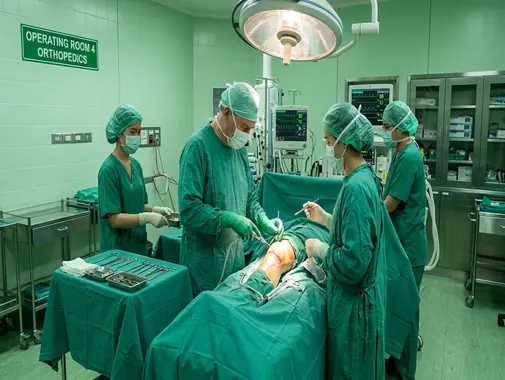
Orthopedics Surgery at AS Medical Complex
Contact hospital
- Availability
Contact hospital
- Booking
WhatsApp / call
- Location
Islamabad
Comprehensive Bone, Joint, Muscle & Orthopedic Surgical Care
The Orthopedics Department at AS Medical Complex provides comprehensive assessment, diagnosis, non-surgical treatment, surgical care, and rehabilitation for injuries and diseases affecting the bones, joints, muscles, ligaments, tendons, and related structures of the musculoskeletal system.
Orthopedic problems can affect people of every age—from children with developmental bone or joint conditions and young adults with sports injuries to older adults experiencing arthritis, fractures, loss of mobility, or degenerative joint disease.
Our goal is to help patients reduce pain, restore movement, regain strength, improve stability, and return to everyday activities as safely and independently as possible.
The department may provide care for acute injuries, fractures, arthritis, sports injuries, knee and hip problems, shoulder conditions, hand and wrist disorders, foot and ankle problems, selected spinal conditions, and patients requiring orthopedic surgery or joint replacement.
Our Orthopedic Services
The Orthopedics Department at AS Medical Complex may provide assessment and management for:
-
Fractures and broken bones
-
Sports injuries
-
Joint pain
-
Knee pain
-
Hip pain
-
Shoulder pain
-
Elbow problems
-
Hand and wrist conditions
-
Foot and ankle disorders
-
Arthritis
-
Osteoarthritis
-
Degenerative joint disease
-
Ligament injuries
-
ACL injuries
-
Meniscus injuries
-
Tendon injuries
-
Muscle injuries
-
Rotator cuff disorders
-
Joint instability
-
Joint stiffness
-
Joint swelling
-
Dislocations
-
Sprains and strains
-
Bone and soft-tissue injuries
-
Back and neck conditions requiring orthopedic assessment
-
Sciatica related to structural spinal disease
-
Selected spinal disorders
-
Osteoporosis-related fractures
-
Hip fractures
-
Wrist fractures
-
Trauma-related orthopedic injuries
-
Pediatric orthopedic conditions
-
Congenital limb abnormalities
-
Bone and joint infections requiring multidisciplinary care
-
Orthopedic surgical assessment
-
Arthroscopy where clinically indicated
-
Fracture fixation
-
Open Reduction and Internal Fixation – ORIF
-
Total Knee Replacement
-
Total Hip Replacement
-
Manipulation Under Anesthesia – MUA
-
Selected orthopedic procedures
-
Postoperative orthopedic care
-
Rehabilitation following orthopedic surgery
-
Orthopedic second opinions
The Ali Medical reference Orthopedics department specifically lists total knee replacement, total hip replacement, ORIF, spinal surgery, and MUA among its major surgical services.
The exact treatment recommended at AS Medical Complex depends on the patient's diagnosis, age, medical condition, imaging findings, symptoms, functional limitations, and individual treatment goals.
Fracture & Trauma Care
Fractures – Broken Bones
A fracture occurs when a bone is partially or completely broken.
Fractures can result from:
-
Falls
-
Road traffic accidents
-
Sports injuries
-
Workplace injuries
-
Direct trauma
-
Twisting injuries
-
Reduced bone strength
-
Osteoporosis
-
Repetitive stress
-
Other traumatic events
Possible symptoms include:
-
Severe pain
-
Swelling
-
Bruising
-
Tenderness
-
Difficulty moving the injured area
-
Inability to bear weight
-
Visible deformity
-
Loss of normal function
Fractures can range from simple stable injuries to complex fractures requiring surgical stabilization.
Closed & Open Fractures
A closed fracture occurs when the bone is broken but there is no open wound communicating with the fracture.
An open fracture occurs when the skin is broken in association with the fracture.
Open fractures require urgent medical attention because contamination can increase the risk of serious infection.
Treatment depends on:
-
Bone involved
-
Location of fracture
-
Degree of displacement
-
Joint involvement
-
Soft-tissue damage
-
Patient age
-
Bone quality
-
Other injuries
Fracture Diagnosis
Orthopedic fracture assessment may involve:
-
Clinical examination
-
X-Ray
-
CT Scan
-
MRI in selected cases
-
Assessment of circulation
-
Assessment of nerve function
-
Evaluation of surrounding joints and soft tissues
X-Ray remains one of the most commonly used investigations for fractures, while CT may provide additional detail for complex injuries.
Non-Surgical Fracture Treatment
Some fractures can heal without surgery.
Treatment may include:
-
Cast
-
Splint
-
Brace
-
Sling
-
Reduction of the fracture
-
Restricted weight-bearing
-
Crutches or walking aids
-
Pain management
-
Follow-up X-Rays
-
Physiotherapy after appropriate healing
The orthopedic surgeon monitors healing to ensure that bone position remains acceptable.
Surgical Fracture Treatment
Surgery may be recommended when a fracture:
-
Is significantly displaced
-
Is unstable
-
Extends into a joint
-
Cannot be maintained in satisfactory position with a cast
-
Is open
-
Is associated with severe soft-tissue injury
-
Threatens blood supply or nerve function
-
Has failed to heal properly
-
Requires early stabilization for rehabilitation
The surgical method depends on the fracture and patient.
ORIF – Open Reduction & Internal Fixation
Open Reduction and Internal Fixation (ORIF) is a surgical technique used to realign and stabilize selected fractures.
“Open reduction” means that the surgeon exposes and restores the broken bone to an appropriate position.
“Internal fixation” means that implants are used to hold the bone in position while it heals.
These may include:
-
Plates
-
Screws
-
Rods
-
Nails
-
Wires
-
Other fixation devices
AAOS describes internal fixation as a surgical method of stabilizing fractures internally using orthopedic implants.
ORIF may be used for selected fractures involving:
-
Upper limbs
-
Lower limbs
-
Hip
-
Ankle
-
Wrist
-
Long bones
-
Joint surfaces
-
Other complex orthopedic injuries
Recovery After Fracture Fixation
Recovery after ORIF varies according to:
-
Type of fracture
-
Bone involved
-
Severity of injury
-
Patient age
-
Bone quality
-
Associated injuries
-
Surgical procedure
-
Rehabilitation
Some patients can begin controlled movement relatively early, while others require longer periods of restricted weight-bearing.
Patients should follow the orthopedic surgeon's specific instructions regarding:
-
Walking
-
Weight-bearing
-
Physiotherapy
-
Wound care
-
Exercise
-
Driving
-
Return to work
-
Return to sports
Dislocations
A joint dislocation occurs when bones forming a joint are forced out of their normal alignment.
Common sites include:
-
Shoulder
-
Finger
-
Elbow
-
Kneecap
-
Hip
-
Other joints
Symptoms may include:
-
Severe pain
-
Visible deformity
-
Swelling
-
Loss of movement
-
Numbness or tingling
A suspected dislocation requires medical assessment.
Patients should generally avoid attempting to force a severely injured joint back into position themselves.
After reduction, further treatment may include:
-
Immobilization
-
Imaging
-
Rehabilitation
-
Strengthening
-
Surgical assessment if instability or major structural injury is present
Sports Injuries
Orthopedic Sports Injury Care
Sports and exercise can produce injuries to:
-
Muscles
-
Ligaments
-
Tendons
-
Cartilage
-
Bones
-
Joints
Common sports injuries include:
-
ACL tears
-
Meniscus injuries
-
Ankle sprains
-
Shoulder dislocations
-
Rotator cuff injuries
-
Muscle strains
-
Tendon injuries
-
Stress fractures
-
Knee injuries
-
Other ligament injuries
Treatment aims not only to reduce pain but also to restore stability, movement, strength, and safe return to activity.
ACL Injury
The Anterior Cruciate Ligament (ACL) is one of the major stabilizing ligaments of the knee.
An ACL injury may occur during:
-
Sudden change in direction
-
Pivoting
-
Landing from a jump
-
Rapid deceleration
-
Direct trauma to the knee
AAOS describes an ACL tear as disruption of the ligament caused when the force applied exceeds the ligament's ability to withstand it.
Possible symptoms may include:
-
A popping sensation
-
Rapid swelling
-
Knee instability
-
Pain
-
Difficulty continuing sports activity
-
Feeling that the knee gives way
ACL Treatment
Not every ACL injury requires the same treatment.
Treatment depends on:
-
Degree of injury
-
Associated meniscus or cartilage damage
-
Age
-
Activity level
-
Knee stability
-
Sports goals
-
Occupation
-
Patient preference
Management may include:
-
Physiotherapy
-
Strengthening
-
Activity modification
-
Bracing in selected cases
-
ACL reconstruction in appropriate patients
Surgical reconstruction may be considered particularly for patients with significant instability or high-demand activity requirements.
Meniscus Injury
The menisci are cartilage structures within the knee that help distribute load and contribute to joint function.
Meniscus tears can occur through:
-
Twisting injuries
-
Sports
-
Degenerative changes
-
Trauma
Symptoms may include:
-
Joint-line pain
-
Swelling
-
Clicking
-
Catching
-
Difficulty fully straightening the knee
-
Locking
-
Pain with twisting
Some meniscus injuries can be managed conservatively.
Others may require arthroscopic treatment depending on tear type, symptoms, age, and associated injuries.
Knee Conditions
Knee Pain
Knee pain may result from conditions involving:
-
Cartilage
-
Meniscus
-
Ligaments
-
Tendons
-
Kneecap
-
Bone
-
Joint lining
-
Arthritis
Common causes include:
-
Osteoarthritis
-
Sports injury
-
ACL injury
-
Meniscus tear
-
Patellofemoral pain
-
Tendon problems
-
Fracture
-
Other joint disorders
Assessment may involve:
-
Examination
-
X-Ray
-
MRI
-
Ultrasound
-
Other tests where appropriate
Knee Osteoarthritis
Osteoarthritis occurs when cartilage within a joint progressively degenerates.
AAOS describes osteoarthritis as a condition in which protective joint cartilage gradually wears away, producing pain and stiffness that can increasingly affect normal daily activities.
Knee osteoarthritis may cause:
-
Pain while walking
-
Pain climbing stairs
-
Stiffness
-
Swelling
-
Reduced movement
-
Grinding sensations
-
Difficulty standing from a chair
-
Reduced walking distance
-
Increasing deformity in advanced disease
Treatment is individualized according to severity.
Non-Surgical Treatment of Knee Arthritis
Treatment may include:
-
Weight management where appropriate
-
Activity modification
-
Physiotherapy
-
Strengthening
-
Walking aids
-
Pain medication
-
Anti-inflammatory treatment where medically appropriate
-
Selected joint injections
-
Bracing
-
Lifestyle modification
Surgery is generally considered when symptoms remain severe despite appropriate non-surgical management or when joint damage is advanced.
Total Knee Replacement
Knee Replacement Surgery
Total Knee Replacement, also called knee arthroplasty, is an operation used for selected patients with severe knee-joint damage.
During joint replacement, damaged joint surfaces are removed and replaced with artificial components designed to restore smoother joint movement.
AAOS notes that knee replacement may be considered when non-surgical treatments such as medication and walking supports are no longer sufficiently helpful.
Potential goals include:
-
Reducing severe pain
-
Improving mobility
-
Correcting selected deformities
-
Improving daily function
-
Improving quality of life
Who May Need Knee Replacement?
Knee replacement may be considered in selected patients who experience:
-
Severe knee pain
-
Advanced arthritis
-
Significant difficulty walking
-
Pain during routine daily activities
-
Pain at rest
-
Significant joint stiffness
-
Progressive deformity
-
Failure of appropriate conservative treatment
The decision is based on symptoms and function as well as X-Ray findings—not X-Ray appearance alone.
Knee Replacement Assessment
Pre-operative assessment may include:
-
Medical history
-
Physical examination
-
Knee X-Rays
-
Blood tests
-
Medical clearance
-
Anesthesia evaluation
-
Assessment of heart and lung conditions where relevant
-
Review of medications
Patients with diabetes, heart disease, kidney disease, or other significant conditions may require additional optimization before surgery.
Recovery After Knee Replacement
Recovery generally includes:
-
Pain management
-
Early mobilization
-
Physiotherapy
-
Walking training
-
Range-of-motion exercises
-
Muscle strengthening
-
Prevention of blood clots
-
Wound monitoring
-
Follow-up visits
The pace of recovery differs among patients.
Physiotherapy plays an important role in restoring movement, strength, balance, and function following joint-replacement surgery.
Hip Conditions
Hip Pain
Hip pain may arise from:
-
Osteoarthritis
-
Fracture
-
Tendon or muscle injury
-
Bursitis
-
Labral injury
-
Structural hip conditions
-
Referred pain from the spine
-
Other orthopedic causes
Patients may experience pain in the:
-
Groin
-
Side of the hip
-
Buttock
-
Thigh
Hip problems may affect:
-
Walking
-
Standing
-
Stair climbing
-
Getting into a vehicle
-
Rising from a chair
-
Sleeping comfortably
Hip Osteoarthritis
Hip osteoarthritis causes progressive cartilage degeneration and can lead to significant pain and stiffness.
AAOS notes that hip osteoarthritis can make everyday activities such as walking, rising from a chair, or bending to put on shoes increasingly difficult.
Symptoms may include:
-
Groin pain
-
Hip stiffness
-
Reduced movement
-
Pain with walking
-
Limping
-
Difficulty putting on socks or shoes
-
Pain after activity
-
Reduced independence
Non-Surgical Hip Arthritis Care
Treatment may include:
-
Activity modification
-
Physiotherapy
-
Strengthening
-
Weight management where appropriate
-
Walking aids
-
Medication
-
Selected injections
-
Other non-operative strategies
Surgery may be considered if pain and disability become severe despite appropriate treatment.
Total Hip Replacement
Total Hip Replacement replaces damaged hip-joint surfaces with artificial components.
Total joint replacement involves removing damaged or arthritic joint surfaces and replacing them with prosthetic components. Hip and knee replacements are among the most commonly performed joint-replacement operations.
Hip replacement may be considered for selected patients with:
-
Advanced hip osteoarthritis
-
Severe pain
-
Significant mobility restriction
-
Difficulty performing everyday activities
-
Certain hip fractures
-
Other severe joint disorders
The decision is individualized according to symptoms, imaging, age, activity requirements, and general health.
Recovery After Hip Replacement
Postoperative rehabilitation may involve:
-
Early mobilization
-
Walking assistance
-
Physiotherapy
-
Strengthening exercises
-
Balance training
-
Activity progression
-
Wound monitoring
-
Blood-clot prevention
-
Follow-up imaging where required
Patients should follow their surgeon's instructions regarding specific movement precautions and activity restrictions.
Hip Fractures
Hip fractures are particularly important in older adults.
They commonly occur following falls and may be associated with underlying osteoporosis.
Symptoms may include:
-
Severe hip or groin pain
-
Inability to stand
-
Inability to bear weight
-
Shortening or abnormal rotation of the leg
-
Significant pain following a fall
Hip fracture usually requires urgent orthopedic assessment.
Treatment frequently involves surgery, although the exact procedure depends on:
-
Location of fracture
-
Displacement
-
Patient age
-
Mobility before injury
-
Bone quality
-
Medical condition
Early rehabilitation is important for restoring mobility after treatment.
Shoulder Conditions
Shoulder Pain
The shoulder has a large range of movement and depends on several bones, muscles, tendons, and ligaments working together.
Orthopedic shoulder conditions may include:
-
Rotator cuff injury
-
Shoulder impingement
-
Frozen shoulder
-
Arthritis
-
Dislocation
-
Instability
-
Fracture
-
Tendon problems
-
Other soft-tissue injuries
Treatment depends on the exact cause rather than simply treating all shoulder pain in the same way.
Rotator Cuff Injury
The rotator cuff is a group of muscles and tendons that help stabilize and move the shoulder.
Rotator cuff tears can develop after injury or gradual degeneration.
AAOS describes many rotator cuff tears as partial or complete separation of one or more tendons from their normal attachment.
Symptoms may include:
-
Shoulder pain
-
Pain when lifting the arm
-
Night pain
-
Weakness
-
Difficulty reaching overhead
-
Reduced function
Treatment may involve:
-
Activity modification
-
Physiotherapy
-
Medication
-
Selected injections
-
Surgical repair in appropriate patients
Frozen Shoulder
Frozen shoulder can cause progressive:
-
Pain
-
Stiffness
-
Reduced range of movement
It may occur without a clear cause or be associated with conditions such as diabetes or prolonged immobilization.
Treatment may include:
-
Pain management
-
Physiotherapy
-
Stretching
-
Selected injections
-
Manipulation under anesthesia in selected resistant cases
-
Arthroscopic treatment in selected patients
MUA – Manipulation Under Anesthesia
Manipulation Under Anesthesia (MUA) is a procedure in which a stiff joint is carefully moved while the patient is under anesthesia.
It may be considered in selected cases of significant stiffness when appropriate conservative treatment has not restored adequate movement.
Potential situations may include:
-
Selected frozen shoulders
-
Significant stiffness following certain orthopedic procedures
-
Selected postoperative joint stiffness
MUA is not appropriate for every stiff joint.
The orthopedic surgeon considers the cause of stiffness, bone quality, previous surgery, imaging, and potential risks before recommending the procedure.
Physiotherapy after manipulation is often important to maintain the movement gained.
Elbow Conditions
Orthopedic elbow conditions may include:
-
Tennis elbow
-
Golfer's elbow
-
Tendon injuries
-
Fractures
-
Dislocations
-
Arthritis
-
Nerve compression
-
Sports injuries
-
Other overuse problems
Symptoms may include:
-
Pain
-
Weakness
-
Swelling
-
Reduced movement
-
Pain gripping objects
Many overuse-related conditions can initially be treated without surgery.
Hand & Wrist Conditions
Hand and Wrist Care
The hand and wrist contain multiple bones, joints, tendons, ligaments, muscles, and nerves.
Conditions may include:
-
Wrist fractures
-
Hand fractures
-
Tendon injuries
-
Ligament injuries
-
Arthritis
-
Trigger finger
-
Carpal tunnel syndrome
-
Ganglion cysts
-
Other structural conditions
Treatment may involve:
-
Splinting
-
Medication
-
Physiotherapy or hand therapy
-
Injections where appropriate
-
Surgical treatment
Carpal Tunnel Syndrome
Carpal tunnel syndrome occurs when the median nerve is compressed as it travels through the wrist.
Symptoms may include:
-
Numbness
-
Tingling
-
Burning
-
Hand weakness
-
Night-time symptoms
-
Difficulty gripping objects
Treatment depends on severity.
Options may include:
-
Wrist splinting
-
Activity modification
-
Injection
-
Surgery in appropriate patients
Foot & Ankle Conditions
Orthopedic foot and ankle care may include assessment of:
-
Ankle sprains
-
Ankle fractures
-
Achilles tendon injuries
-
Heel pain
-
Plantar fasciitis
-
Foot deformities
-
Arthritis
-
Sports injuries
-
Other musculoskeletal conditions
Ankle Sprain
An ankle sprain occurs when ligaments supporting the ankle are stretched or torn.
Symptoms may include:
-
Pain
-
Swelling
-
Bruising
-
Difficulty walking
-
Instability
Most uncomplicated sprains can be managed non-surgically, but severe injuries may require imaging and specialist assessment to exclude fractures or major ligament damage.
Achilles Tendon Injury
The Achilles tendon connects the calf muscles to the heel.
Injury may cause:
-
Sudden pain behind the ankle
-
A popping sensation
-
Difficulty pushing off the foot
-
Weakness
-
Difficulty standing on the toes
Treatment may be surgical or non-surgical depending on the type of injury and patient factors.
Arthritis & Joint Disease
Osteoarthritis
Osteoarthritis is the most common type of arthritis and results from progressive changes to the cartilage and other structures within a joint.
It commonly affects:
-
Knees
-
Hips
-
Hands
-
Spine
-
Other joints
AAOS describes osteoarthritis as progressive cartilage loss leading to pain and stiffness that can interfere with normal daily activity.
Symptoms may include:
-
Joint pain
-
Stiffness
-
Swelling
-
Reduced movement
-
Grinding sensations
-
Difficulty walking
-
Reduced ability to perform everyday tasks
Rheumatoid & Inflammatory Arthritis
Not all arthritis is osteoarthritis.
Inflammatory conditions such as rheumatoid arthritis require medical evaluation and often long-term specialist management.
Patients with suspected inflammatory arthritis may be coordinated with the Rheumatology Department, while Orthopedics may become involved when structural joint damage or surgical treatment is being considered.
Joint Replacement Surgery
Joint replacement may be considered when a joint has become severely damaged and symptoms significantly interfere with everyday life.
AAOS describes total joint replacement as removal of damaged joint surfaces followed by replacement with metal, plastic, ceramic, or other prosthetic components intended to recreate functional joint movement.
Common joint replacements include:
-
Knee replacement
-
Hip replacement
Other joints can also be replaced in selected circumstances.
Surgery is generally considered after careful evaluation of:
-
Pain severity
-
Functional limitation
-
Imaging
-
Response to non-surgical treatment
-
Medical fitness
-
Patient expectations
Arthroscopy
Minimally Invasive Joint Surgery
Arthroscopy is a minimally invasive surgical technique that uses a small camera inserted into a joint.
It allows an orthopedic surgeon to inspect and treat selected problems through small incisions.
Arthroscopy may be used for certain conditions involving the:
-
Knee
-
Shoulder
-
Ankle
-
Wrist
-
Other joints
Depending on the diagnosis, arthroscopic procedures may address:
-
Meniscus injuries
-
Ligament-related conditions
-
Selected cartilage problems
-
Loose fragments
-
Shoulder problems
-
Other intra-articular disorders
Not every joint problem benefits from arthroscopic surgery.
Patient selection should be based on symptoms, examination, imaging, and evidence regarding the specific condition.
Spine & Orthopedic Back Conditions
Orthopedic surgeons may assess selected conditions affecting the spine and supporting musculoskeletal structures.
These may include:
-
Lower-back pain
-
Neck pain
-
Degenerative spinal conditions
-
Herniated discs
-
Sciatica
-
Spinal stenosis
-
Scoliosis
-
Selected spinal deformities
-
Osteoporotic spinal fractures
AAOS notes that a herniated lumbar disc can cause lower-back pain and pain radiating down the leg, commonly called sciatica.
Initial treatment for many herniated discs is non-surgical.
Back Pain
Back pain is extremely common and does not automatically require surgery.
Possible treatment may include:
-
Activity modification
-
Physiotherapy
-
Exercise
-
Medication
-
Posture and movement guidance
-
Selected spinal injections
-
Surgical evaluation where appropriate
Patients with neurological weakness or other concerning symptoms require more urgent assessment.
Orthopedics & Neurosurgery
Some spinal disorders may be managed by orthopedic spine surgeons, while others may require or benefit from Neurosurgery.
At AS Medical Complex, patients with significant spinal-cord or nerve involvement may require multidisciplinary assessment involving:
-
Orthopedics
-
Neurosurgery
-
Neurology
-
Radiology
-
Physiotherapy
-
Pain-management services where available
The appropriate specialty depends on the underlying diagnosis.
Osteoporosis & Fragility Fractures
Bone Weakness
Osteoporosis causes bones to become weaker and more likely to fracture.
AAOS describes osteoporosis as progressive loss of bone strength associated with increased fracture risk.
Fragility fractures commonly involve:
-
Hip
-
Wrist
-
Spine
-
Other bones
A fracture following a relatively minor fall—particularly in an older adult—may therefore be a sign of reduced bone strength.
Orthopedic Management of Osteoporotic Fractures
Orthopedic care may involve:
-
Fracture stabilization
-
Surgical treatment when required
-
Mobilization
-
Rehabilitation
-
Fall-prevention advice
-
Referral for bone-density evaluation
-
Coordination of osteoporosis treatment
Preventing the next fracture is an important part of long-term care after a fragility fracture.
Pediatric Orthopedics
Bone & Joint Problems in Children
Children's bones are still growing and require age-appropriate orthopedic assessment.
Pediatric orthopedic concerns may include:
-
Fractures
-
Limb deformities
-
Walking abnormalities
-
Clubfoot
-
Congenital bone and joint problems
-
Developmental hip conditions
-
Limb-length differences
-
Sports injuries
-
Scoliosis
-
Other musculoskeletal conditions
Treatment should consider:
-
Age
-
Growth potential
-
Development
-
Severity
-
Function
-
Long-term effects
Children with significant orthopedic conditions may require coordinated care with Pediatrics, Physiotherapy, Radiology, or other relevant specialties.
Orthopedic Infections
Bone and joint infections can become serious.
Possible conditions include:
-
Osteomyelitis – bone infection
-
Septic arthritis – joint infection
-
Infection after orthopedic surgery
-
Infection involving orthopedic implants
Symptoms may include:
-
Severe joint or bone pain
-
Swelling
-
Redness
-
Fever
-
Difficulty moving the joint
-
Wound drainage
-
Increasing postoperative pain
Management may require:
-
Blood tests
-
Imaging
-
Joint aspiration
-
Cultures
-
Antibiotics
-
Surgery
-
Implant management
Care may be coordinated with Infectious Disease and other specialties.
Orthopedic Diagnostic Tests
Diagnosis usually begins with:
-
Medical history
-
Injury history
-
Physical examination
-
Assessment of movement
-
Assessment of strength
-
Joint-stability testing
-
Neurological examination when appropriate
Depending on the condition, investigations may include:
-
X-Ray
-
MRI
-
CT Scan
-
Ultrasound
-
DEXA / bone-density scan
-
Blood tests
-
Joint-fluid analysis
-
Nerve-conduction studies
-
EMG
-
Other specialized investigations
The Ali Medical reference page similarly identifies X-Ray, MRI, CT, ultrasound, laboratory testing, and selected nerve-function studies as tools used to diagnose orthopedic conditions.
X-Ray in Orthopedics
X-Rays may help assess:
-
Fractures
-
Joint alignment
-
Arthritis
-
Bone deformity
-
Healing after surgery
-
Orthopedic implants
-
Other bone abnormalities
MRI in Orthopedics
MRI provides detailed images of:
-
Ligaments
-
Tendons
-
Muscles
-
Cartilage
-
Meniscus
-
Spinal discs
-
Nerves
-
Bone marrow
-
Other soft tissues
It may be useful for:
-
ACL injury
-
Meniscus tear
-
Rotator cuff injury
-
Disc problems
-
Certain joint conditions
CT Scan in Orthopedics
CT may be particularly useful for:
-
Complex fractures
-
Joint fractures
-
Pelvic injuries
-
Spine injuries
-
Surgical planning
-
Detailed bone anatomy
Non-Surgical Orthopedic Treatment
Not every orthopedic problem requires an operation.
Many patients can be treated using combinations of:
-
Activity modification
-
Rest from aggravating activity
-
Physiotherapy
-
Exercise rehabilitation
-
Pain medication
-
Anti-inflammatory medicine where medically appropriate
-
Bracing
-
Splinting
-
Casting
-
Walking aids
-
Weight management
-
Joint injections in selected cases
-
Lifestyle modification
Surgery is considered when it offers a meaningful expected benefit compared with continued non-operative treatment.
Physiotherapy & Orthopedic Rehabilitation
Physiotherapy is an important component of both non-surgical orthopedic care and recovery after surgery.
It may help improve:
-
Strength
-
Flexibility
-
Joint movement
-
Balance
-
Walking
-
Coordination
-
Functional independence
Rehabilitation may be appropriate following:
-
Fractures
-
Sports injuries
-
Joint replacement
-
Arthroscopy
-
Ligament surgery
-
Shoulder surgery
-
Spine procedures
-
Prolonged immobilization
At AS Medical Complex, orthopedic care may be coordinated with the Physiotherapy Department to develop an appropriate rehabilitation plan.
Orthopedic Surgery Preparation
Before planned orthopedic surgery, assessment may involve:
-
Medical history
-
Physical examination
-
Blood tests
-
X-Rays or other imaging
-
Anesthesia review
-
Medication review
-
Assessment of diabetes
-
Blood-pressure control
-
Heart assessment where needed
-
Infection screening where appropriate
Patients taking blood thinners, diabetes medicines, or other important medications should follow the specific instructions provided by the treating team.
Do not stop prescription medicines independently.
Orthopedics & Anesthesia
Orthopedic procedures may use:
-
General anesthesia
-
Spinal anesthesia
-
Regional anesthesia
-
Nerve blocks
-
Other anesthetic techniques
The most appropriate technique depends on:
-
Procedure
-
Patient health
-
Expected surgical duration
-
Pain-management needs
-
Anesthesia assessment
Orthopedic surgeons and the Anesthesia Department work together to plan perioperative care.
Pain Management After Orthopedic Surgery
Postoperative pain treatment may involve a combination of:
-
Oral medication
-
Intravenous medication
-
Regional anesthesia
-
Nerve blocks
-
Anti-inflammatory medication where appropriate
-
Other non-opioid medications
-
Ice and positioning
-
Rehabilitation strategies
Pain management is individualized according to the operation and patient's medical condition.
Preventing Blood Clots After Surgery
Some orthopedic operations, particularly major lower-limb surgery, can increase the risk of venous blood clots.
Depending on individual risk, prevention may involve:
-
Early mobilization
-
Leg exercises
-
Compression devices
-
Blood-thinning medication
-
Other preventive measures
Patients should follow the postoperative plan prescribed by the surgical team.
Postoperative Orthopedic Care
After orthopedic surgery, patients may require:
-
Wound monitoring
-
Pain management
-
Physiotherapy
-
Walking assistance
-
Activity restrictions
-
Follow-up X-Rays
-
Suture or staple review
-
Monitoring for infection
-
Rehabilitation planning
Recovery depends on:
-
Procedure
-
Age
-
Overall health
-
Bone and soft-tissue healing
-
Rehabilitation
-
Preoperative function
Signs of Possible Postoperative Complications
Contact the medical team if symptoms include:
-
Increasing wound redness
-
Significant wound discharge
-
Fever
-
Increasing swelling
-
Severe unexplained pain
-
Wound separation
-
New numbness or weakness
-
Significant calf swelling
-
Sudden difficulty breathing
Certain symptoms may require emergency assessment.
Orthopedic Emergencies
When Is Urgent Orthopedic Care Required?
Seek urgent medical attention for:
-
Severe injury with visible deformity
-
Open fracture
-
Bone visible through a wound
-
Loss of circulation to a limb
-
Cold, pale, or blue hand or foot after injury
-
New severe numbness after trauma
-
Major loss of movement following injury
-
Severe uncontrolled bleeding
-
Suspected hip fracture
-
Major trauma
-
Suspected infected joint with fever
-
Severe rapidly increasing swelling after injury
-
Severe pain that is much greater than expected
-
Sudden loss of function after orthopedic surgery
Compartment Syndrome
Acute compartment syndrome is a serious condition in which pressure builds within muscles after an injury and can reduce blood flow to nerves and muscle tissue.
AAOS describes acute compartment syndrome as a surgical emergency that can cause permanent tissue damage and loss of function if pressure is not relieved promptly.
Warning features may include:
-
Severe pain
-
Rapidly increasing pain
-
Pain out of proportion to the injury
-
Severe tight swelling
-
Pain when affected muscles are stretched
-
Numbness or weakness
Suspected compartment syndrome requires immediate emergency assessment.
Preventing Orthopedic Injuries
Not every musculoskeletal injury can be prevented, but risk may sometimes be reduced through:
-
Regular physical activity
-
Strength training
-
Flexibility exercises
-
Appropriate warm-up
-
Gradual increases in exercise intensity
-
Correct sports technique
-
Appropriate footwear
-
Protective equipment
-
Fall prevention
-
Maintaining healthy bone strength
-
Avoiding smoking
-
Appropriate treatment of osteoporosis
AAOS emphasizes strengthening and flexibility as important components of supporting joints and reducing injury risk.
Multidisciplinary Orthopedic Care
Musculoskeletal problems can sometimes involve several medical specialties.
Depending on the diagnosis, Orthopedics may coordinate care with:
-
Physiotherapy
-
Rheumatology
-
Neurosurgery
-
Neurology
-
Radiology
-
Anesthesia
-
General Medicine
-
Endocrinology
-
Infectious Disease
-
Pediatrics
-
Diet & Nutrition
-
Critical Care
-
Other relevant specialties
Examples include:
-
Arthritis with Rheumatology
-
Spine and nerve compression with Neurosurgery
-
Fragility fractures with Endocrinology or General Medicine
-
Bone infection with Infectious Disease
-
Joint replacement rehabilitation with Physiotherapy
This multidisciplinary approach helps address both the orthopedic problem and any medical conditions that could affect treatment or recovery.
When Should You Visit an Orthopedic Surgeon?
You may consider orthopedic consultation if you experience:
-
Persistent joint pain
-
Significant joint stiffness
-
Recurrent swelling
-
Difficulty walking
-
Reduced movement
-
Sports injury
-
Suspected fracture
-
Persistent pain after an injury
-
Knee instability
-
Shoulder weakness
-
Hip pain affecting walking
-
Back or neck pain associated with structural orthopedic disease
-
Joint deformity
-
Recurrent joint dislocation
-
An abnormal X-Ray or MRI
-
Severe arthritis
-
A condition for which surgery has been recommended
-
A need for joint-replacement assessment
-
A need for a second orthopedic opinion
The Ali Medical reference department similarly recommends orthopedic assessment for persistent pain, swelling, stiffness, restricted movement, walking difficulty, and musculoskeletal injuries.
Long-Term Orthopedic Care
Some orthopedic conditions resolve after treatment, while others require ongoing monitoring.
Regular follow-up may be appropriate after:
-
Fractures
-
Joint replacement
-
Ligament reconstruction
-
Major orthopedic trauma
-
Spine surgery
-
Arthroscopy
-
Recurrent joint instability
-
Chronic arthritis
-
Pediatric orthopedic conditions
Follow-up helps the orthopedic team:
-
Monitor healing
-
Review X-Rays
-
Assess joint movement
-
Evaluate pain
-
Monitor implants
-
Identify complications
-
Adjust rehabilitation
-
Determine return to work or sports
-
Plan additional treatment if required
At AS Medical Complex, our aim is to provide continuity of orthopedic care from initial assessment and diagnosis through non-surgical treatment, surgery when required, rehabilitation, and long-term follow-up.
Orthopedics Surgery FAQs
What does an orthopedic surgeon treat?
An orthopedic surgeon specializes in conditions affecting the bones, joints, muscles, ligaments, tendons, and related musculoskeletal structures. Orthopedic care includes both non-surgical and surgical management of conditions such as fractures, arthritis, sports injuries, joint problems, and selected spinal disorders.
Does visiting an orthopedic surgeon mean I need surgery?
No. Many orthopedic conditions can initially be treated using physiotherapy, activity modification, bracing, medication, injections, or other non-operative approaches. Surgery is considered when it is expected to provide an appropriate benefit based on the diagnosis, severity, and response to previous treatment.
What is ORIF?
ORIF stands for Open Reduction and Internal Fixation. During the procedure, a displaced fracture is surgically realigned and stabilized using implants such as plates, screws, rods, or nails. AAOS describes internal fixation as an established surgical technique for stabilizing selected fractures.
When is knee replacement recommended?
Total knee replacement may be considered when severe arthritis causes significant pain, stiffness, mobility problems, or reduced quality of life and appropriate non-surgical treatments are no longer providing sufficient relief. Joint replacement removes damaged surfaces and replaces them with artificial components.
What is the difference between a sprain and a fracture?
A sprain involves injury to ligaments supporting a joint, while a fracture involves a break in a bone. Both can cause pain, swelling, and difficulty using the injured area, so imaging may sometimes be necessary to distinguish between them.
Can sports injuries be treated without surgery?
Yes. Many sports injuries can be treated with activity modification, physiotherapy, strengthening, bracing, and other conservative treatment. Surgery may be considered for selected injuries such as significant ligament tears, persistent joint instability, or structural damage that does not respond adequately to non-surgical management.
Which orthopedic symptoms need emergency treatment?
Open fractures, severe limb deformity, loss of circulation, major trauma, suspected hip fracture, severe pain with rapidly increasing swelling, or new loss of sensation or movement require urgent assessment. Acute compartment syndrome is a surgical emergency because excessive pressure within muscle compartments can threaten blood supply and tissue function.
Orthopedic Care at AS Medical Complex
The Orthopedics Department at AS Medical Complex is committed to providing comprehensive, patient-focused care for bone, joint, muscle, ligament, tendon, and musculoskeletal conditions.
From fractures, sports injuries, arthritis, knee and hip disorders, shoulder problems, and orthopedic trauma to ORIF, arthroscopy, total knee replacement, total hip replacement, and other orthopedic surgical procedures, our goal is to reduce pain, restore movement, improve function, and help patients return to active daily life.
Book an appointment with our Orthopedics Department for fracture and trauma care, knee and hip pain, arthritis, sports injuries, shoulder and joint problems, orthopedic surgical consultation, joint-replacement assessment, and specialist musculoskeletal care.